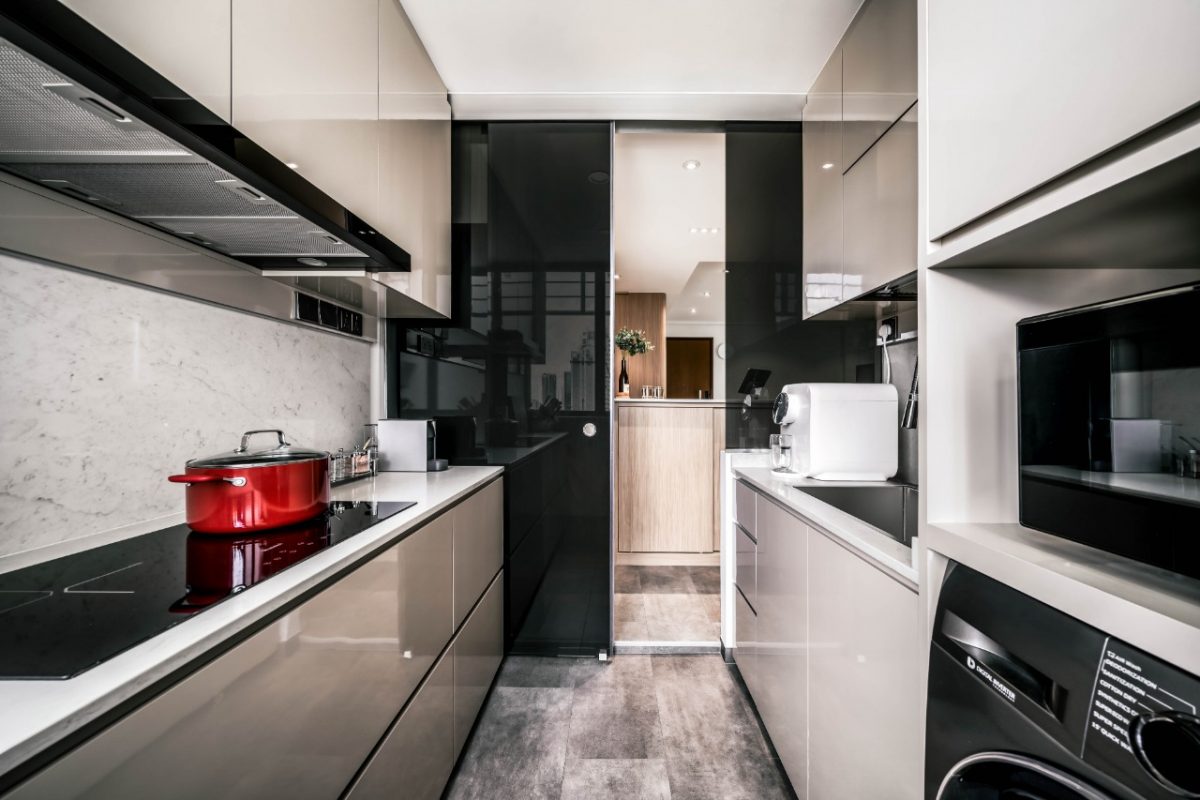
5-Holland-Green-3

Kitchen Door In Singapore 2026

About Kitchen Doors In Singapore

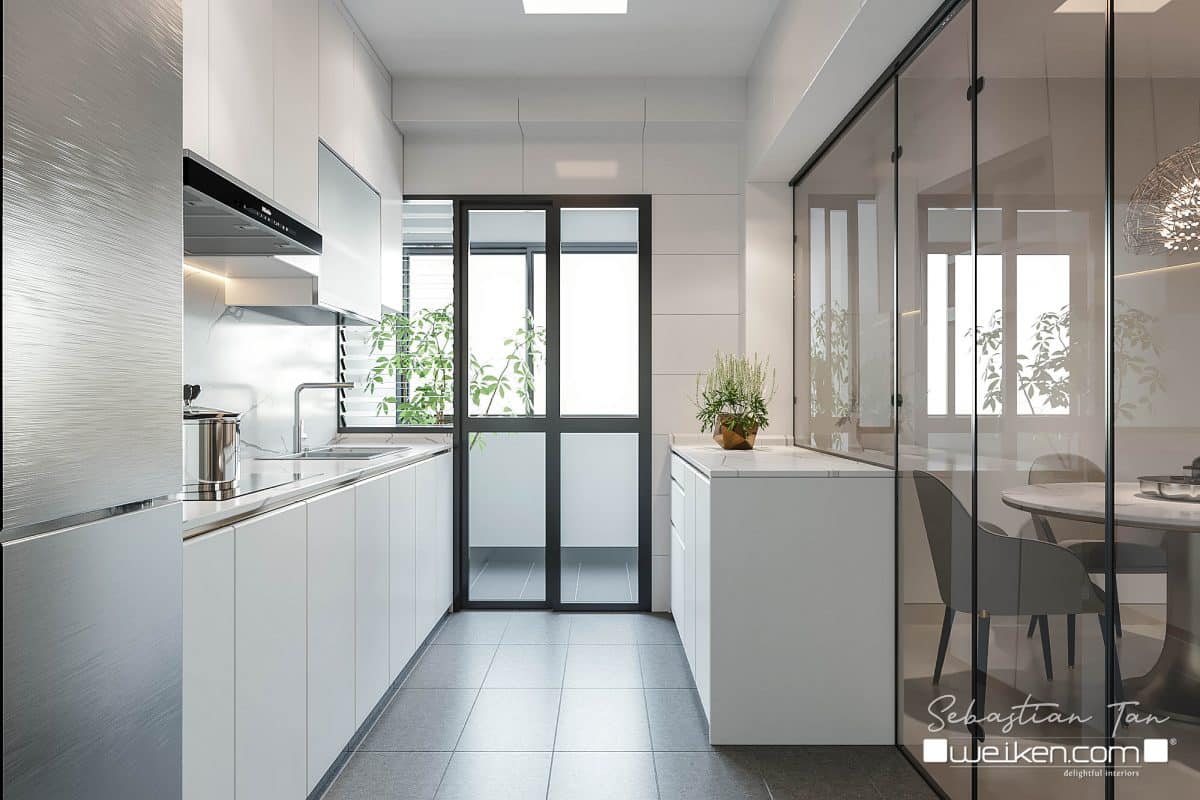
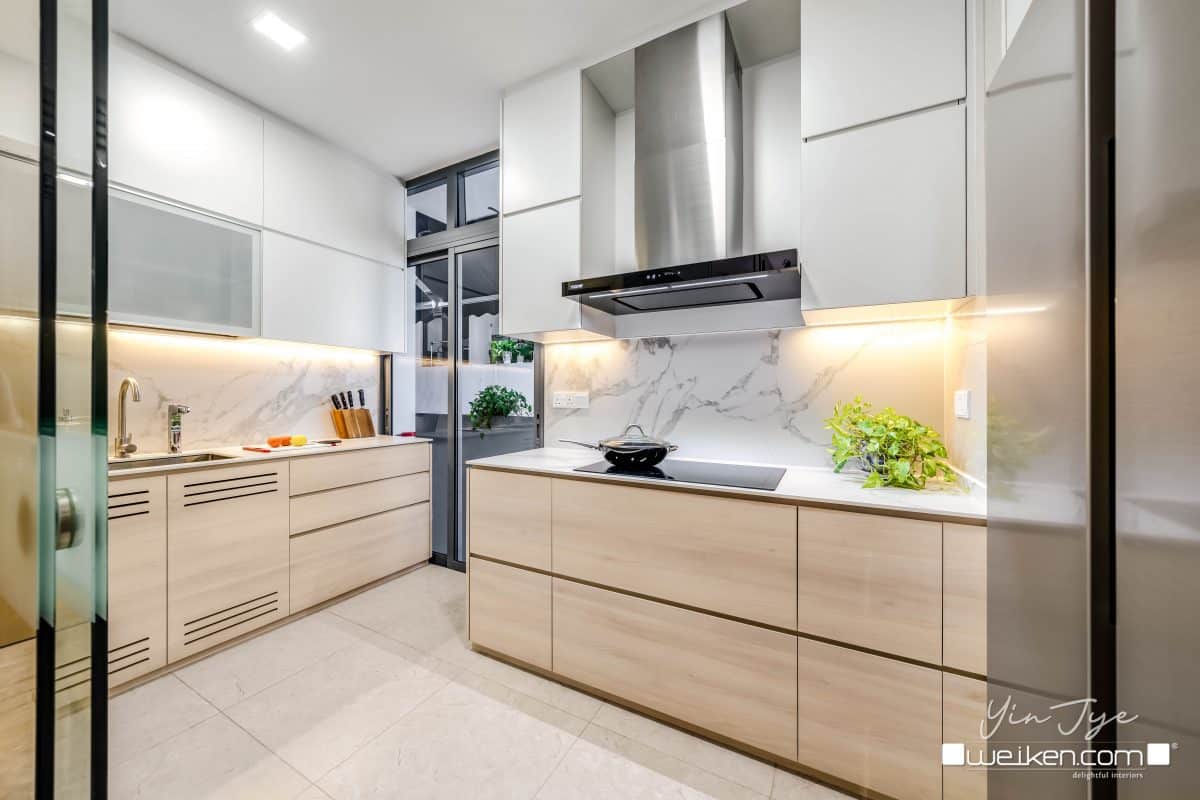
Choosing the right kitchen door in Singapore is about balancing ventilation, durability, and visual appeal. Many homeowners in 2026 prefer slim aluminium-framed glass doors because they allow natural light to flow while helping contain cooking fumes when needed. Frosted, reeded, and fluted glass remain popular choices, offering privacy without making the kitchen feel enclosed. For compact HDB layouts, sliding or pocket doors maximise usable space and create smoother movement between rooms. Matching the door finish with the kitchen cabinetry also gives the home a more cohesive appearance, making the entire renovation feel intentional, modern, and built to last.

5-Holland-Green-3

Which Type of Door is Best for Kitchen?

Regardless of where you want to install your kitchen door, knowing the best material appropriate to use in the kitchen is essential to make your kitchen convenient and efficient. The most common materials used for kitchen doors are glass, stainless steel, engineered wood, and solid wood. Make sure that the door you install is made of either of these materials to ensure comfortability and safety in your kitchen.

#9 Kitchen Door Ideas Singapore

Below are some of the door types that are perfect to have in the kitchen. Check them out!

1. Sliding Glass Doors

421C-NorthShore-Drive-1

Sliding doors, whether used as an interior or external entry door, may significantly increase air circulation and ventilation. They can function as extra-large glass windows that you can open to let the natural light and air go through the space. Sliding glass doors can seamlessly blend indoor and outdoor areas as well as the interior space. It is an ideal kitchen door to have for contemporary homes with an open-plan layout.

2. Bi-fold Doors

BLK-130-Bukit-Batok-West-1

Any kitchen would benefit greatly from having bifold doors. They may provide illumination, wide-ranging viewpoints, and a smooth transition from an indoor space to an outside one. Bi-fold doors are a great addition if you want to create a tiny bit of creativity in a minimalist setting. Bi-fold doors are playful and interesting to look at. They offer visual texture and are truly a perfect minimalist accent to an all-white kitchen.

3. Barn Doors

623B-Tampines-Ave-2-2

Barn doors are a terrific alternative for any of these rooms, including a den, dining, living, and kitchen. You can simply lock it off if the area is cluttered or you need some solitude. Barn doors may connect the various rooms in your house more easily and give your interior a contemporary feel. They are excellent in kitchen spaces, especially for walk-in pantries and big storage spaces.

4. French Doors

1-newton-rd-1

French doors may be an excellent entry point between adjacent rooms or outside areas and aesthetically link spaces. French doors have a number of benefits over sliding glass doors, including making it easier for daylight to move between rooms. French doors are frequently used for both indoor and outdoor environments. French doors are undoubtedly quite practical, but their aesthetic appeal is their main use. French doors may have a significant influence on your house.

5. Frosted Glass Doors

Alkaff-Oasis-3

Alternatives that are more environmentally friendly and let in natural light include frosted glass doors. They greet people into the space with a cozy indoor ambiance, giving them a natural vibe.

As a result, there is a considerable decrease in the need for artificial illumination, which also lowers energy usage. Because it fosters both a sense of solitude and style, frosted glass is the material of choice for some homeowners.

A frosted glass door can also be used in above-the-counter cabinetry to hide or conceal the cookware and kitchen utensils. The kitchen can be tiring or challenging to clean and organize. You can use them as doors to cabinets and pantry. They can effectively hide clutter especially if you’re too busy to arrange and organize the spices and condiments in your cupboard.

6. Screen Doors

104a-Bidadari-Park-Drive-3

Screen doors give the kitchen space good natural ventilation while at the same time keeping the pests and bugs from entering the kitchen. They typically feature basic hardware and hinges and are frequently made with wood or aluminum frames.

In more temperate areas, screen doors are a great option for ventilation, especially for kitchen entrance doors, and are a natural addition to a screened-in porch. Additionally, the Singapore screen kitchen door is an excellent alternative for porch or deck entryways since they make it simple to move between each space.

7. Kitchen Sliding Doors In Singapore

Sin-Ming-Ave-4

Patios and backyards may be quickly and easily accessed thanks to sliding doors. They come in particularly helpful for homeowners who enjoy cooking in the kitchen since they may provide an easy link to outside areas, enabling them to host gatherings for pool parties or barbecue times in the backyard.

You can use a kitchen sliding doors in modern and minimalist spaces. You also have the freedom to style them all you want or transform them into a new piece.

8. Kitchen Door With Sliding Partition

Woodlands-Street-82-5

A Singapore kitchen door can be both a door and a decorative partition. If you are installing a kitchen door to divide the space between your dining and your kitchen space, then a wooden French sliding door is your best option.

You can close the door if you want to focus more on cooking or open it during family dinners and social gatherings to allow guests to enter the kitchen space with ease. Opening up the door will also make the space look larger. This type of door is considered a classic and is commonly seen in a traditional, farmhouse, and rustic chic interiors.

The door in your interior space, whether it’s in the living room; bedroom; dining room; and kitchen, can impact the overall visual and functional scheme of your kitchen. When deciding on the kitchen door types to purchase, get the insight of a professional designer to help you guide you on the right path. If you’re interested in finding out more about weikeninterior and what we do, go through our website and read some resources. Hope you find this blog helpful!

1G-Cantonment-Road-4

Different Kinds of Kitchen Countertop in Singapore 2025

About Kitchen Countertop in Singapore

Designing the kitchen is no easy task. It requires effort, time, and resources. More than that, it also demands extensive planning, material searching, and accurate designing to achieve the desired result.

When it comes to choosing the material for your kitchen countertop, there are a lot of things that need to be factored in. This includes the kitchen countertop height, kitchen countertop bar, cost, aesthetic, durability, functionality, and appropriateness. You don’t just select a material because of its color or design.

You also need to consider those underlying factors that have the most impact when it comes to the kitchen’s efficiency and usability. Different materials have different perks. In this article, we’re going to look at #11 most commonly used kitchen countertop materials and get to know more about their nature, as well as their pros and cons. Let’s dive right in.

Most Commonly Used Kitchen Countertop Types In Singapore

1. Marble

Senja-Close-5

For many homeowners, marble is still the most popular choice for kitchen worktops. It does, however, have limits that should be considered while using it in the kitchen. If used for kitchen countertops, it is a rather delicate and porous stone that must be sealed carefully and periodically.

Marble is one of the most appealing natural stones due to its distinctive look and veined patterns. The two main downsides of a marble kitchen countertop in Singapore are it can get quickly discolored unless it is treated on a regular basis with a high-quality sealant due to its porous characteristic. Secondly, since it is a soft delicate stone, it can easily get scratched.

2. Granite

Belgravia-Drive-5

Because of its durability and natural beauty, granite remains the most preferred countertop material. Granite has the ability to transform any kitchen into a lavish and opulent space.

Is it really worth it to spend so much money on granite countertops? The answer is yes. If you choose a neutral color and design, they will last for years with minimal upkeep. When compared to marble, which may only last 20 years, experts believe they will endure 100 years if carefully managed.

Granite is expensive and is not DIY-friendly. Seek the help of a contractor or professional granite installer when installing granite countertops.

3. Laminate

Mandalay-Road-3

Laminates are one of the most versatile of all countertop materials. Although they are not as regarded as those expensive high-class materials, laminates look nonetheless different.

It is made up of a thin layer of plastic laminate laminated to particleboard or medium-density fiberboard.

They look aesthetically good and work well in modern or mid-century modern homes. Note that when compared to other materials, laminate countertops might feel empty and light.

4. Ceramic Kitchen Countertop

EdgeField-Plains-5

For new countertop selections, ceramic tile is a good moderate option. It comes in a variety of colors and sizes. It can also be purchased in quantity for a reasonable price. It is durable, easy to install, and looks visually appealing in any kind of kitchen design. It’s also great for a DIY project if you want to make your own countertops.

5. Soapstone

Strathmore-Ave-2

A soapstone countertop is great for your kitchen if you often place hot things on your countertops. Surfaces made of soapstone are heat resistant. Soapstone is naturally non-porous. As a result, you won’t have to worry about staining or heat damage. Soapstone countertops are perfect for most kitchens because of this particular characteristic.

6. Quartz

Meyer-Road-4

If you would list down kitchen countertop materials from the strongest to the weakest, a kitchen with a quartz countertop would definitely top the list. It is harder and more durable compared to granite.  It is also not porous which means, it is easier to clean and is resistant to any form of bacteria buildup.

Quartz is an excellent choice for kitchen counters, as well as bathrooms.  Because of its durability and wide range of colors and styles, it’s a very practical material.

7. Slate

Seletaris-Condo-4

Slate is perhaps the most affordable countertop. It costs less than granite, quartz, marble, concrete, and other countertop surfaces. Slate is a heat-resistant countertop surface that can be readily sliced into thin sheets and absorbs very little moisture.

Slate tiles are ideal for kitchen and bathroom countertops because of their longevity and toughness. Slate counter surfaces are resistant to heat-generating appliances such as hot pots and hair tools.

8. Concrete

Sin-Ming-Ave-3

Concrete also makes for good kitchen countertops. It is a long-lasting material as long as it is sealed and properly maintained. While concrete is not impervious to scratches, it outperforms softer counter materials like solid surfaces and laminate.

Concrete countertops are becoming increasingly popular in kitchens of all types, from modern to classic.

9. Stainless Steel

River-Valley-Road-2

You might be thinking. Isn’t stainless steel for chef’s kitchens and restaurants? Technically yes, but stainless steel also works for regular kitchens especially those with modern industrial style.

Steel countertops are not only attractive, but they are also water-resistant as well as heat and stain-resistant. Stainless steel will resist corrosion, food stains, and meat juices, as well as the strong cleaning agents used in industrial kitchens.

10. Recycled Aluminum

421C-NorthShore-Drive-4

Contrary to what many people think, recycled aluminum is somewhat similar to engineered stone and other solid surface countertops rather than to stainless steel and other metallic materials.

It is primarily because they are a blend of solid surface waste, aluminum flake, scrap, and recycled acrylic. Aluminum countertops are one of the least common forms of metal countertops, but owing to their unique qualities, they may be utilized in a variety of applications.

11. Recycled Glass

Recycled glass countertops are made from a mixture of glass melted down to form a new slab. Similar to other countertop materials, it is durable and heat resistant which makes them a viable alternative for daily usage, although they are not as lasting as other materials.

If sharp objects such as knives scratch the surface, the glass may chip, especially around the corners.

The variety of materials available for kitchen countertops is astounding, and there are kitchen countertop materials that have not been included in this list. It seems like an endless choice. 

Each material has benefits and disadvantages that must be considered before making a purchase decision. We hope this blog has helped you in any way and assisted you in making informed choices when designing your kitchen.

5-Holland-Green-3

HDB Kitchen Island Design in Singapore (Updated 2026)

About HDB Kitchen Island Design

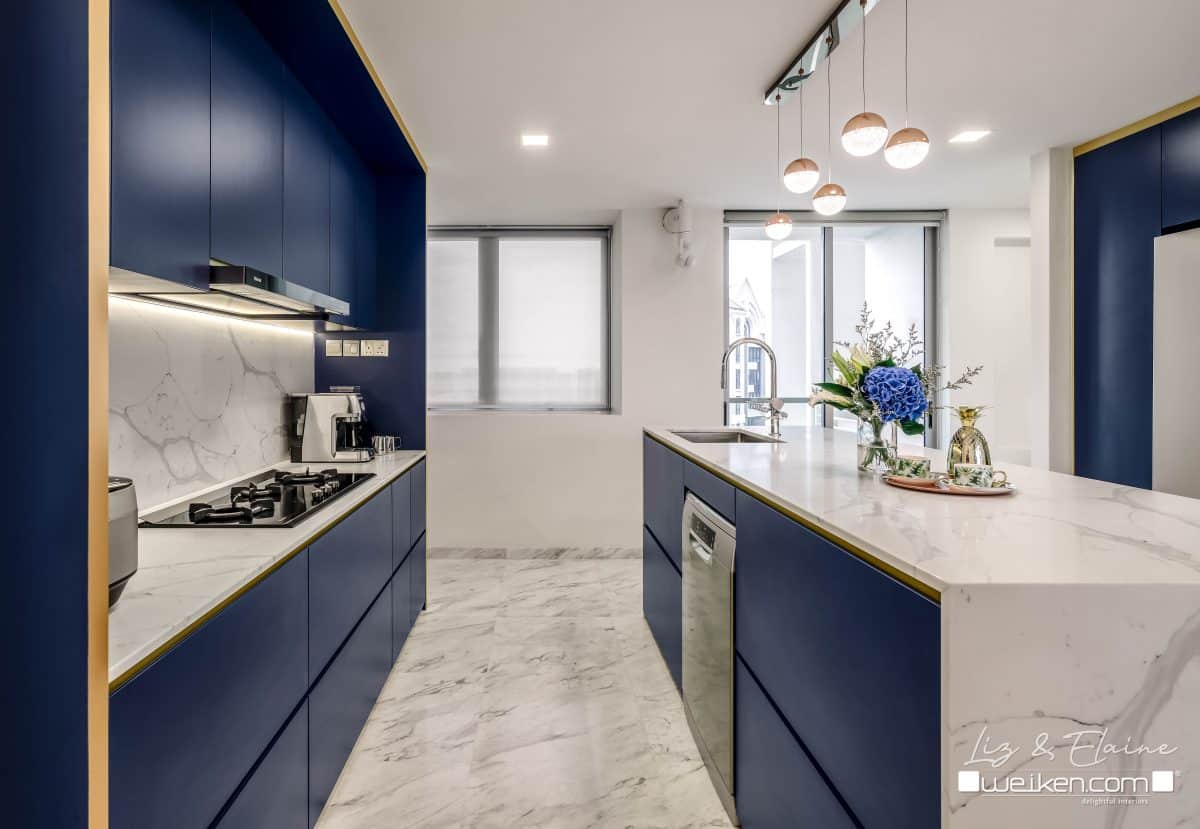
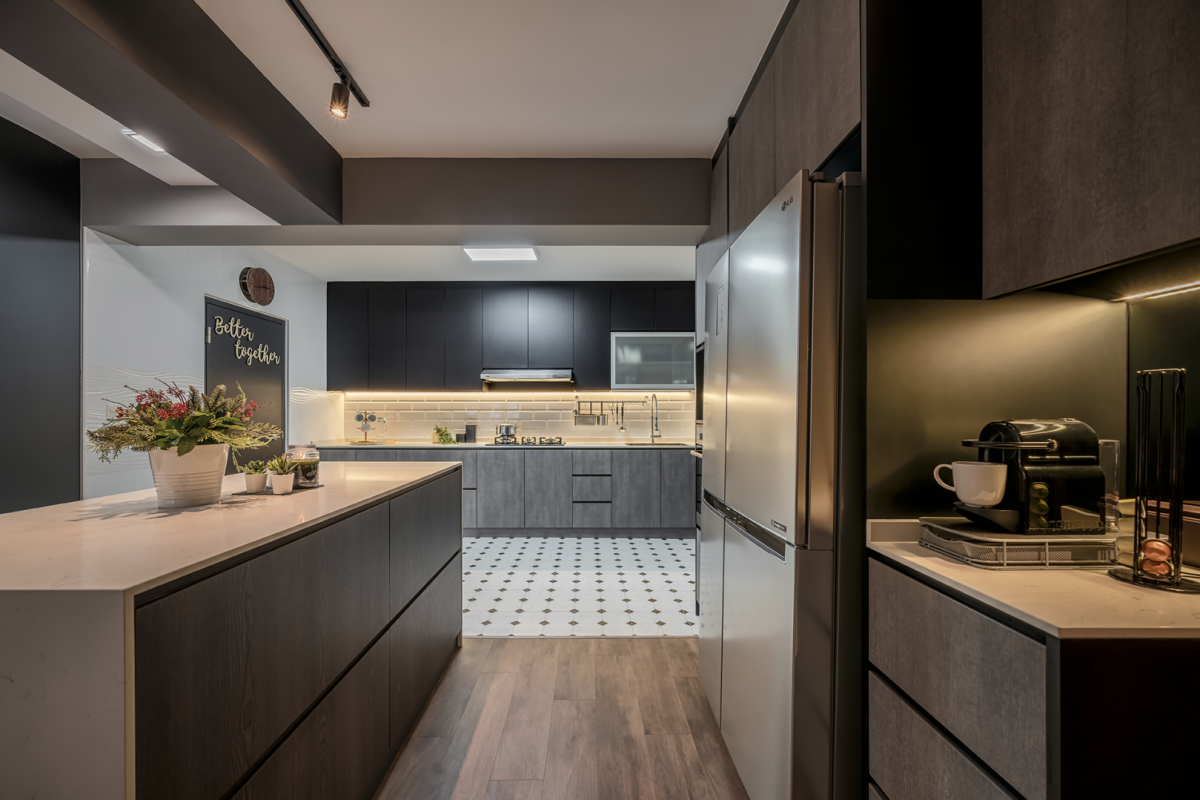
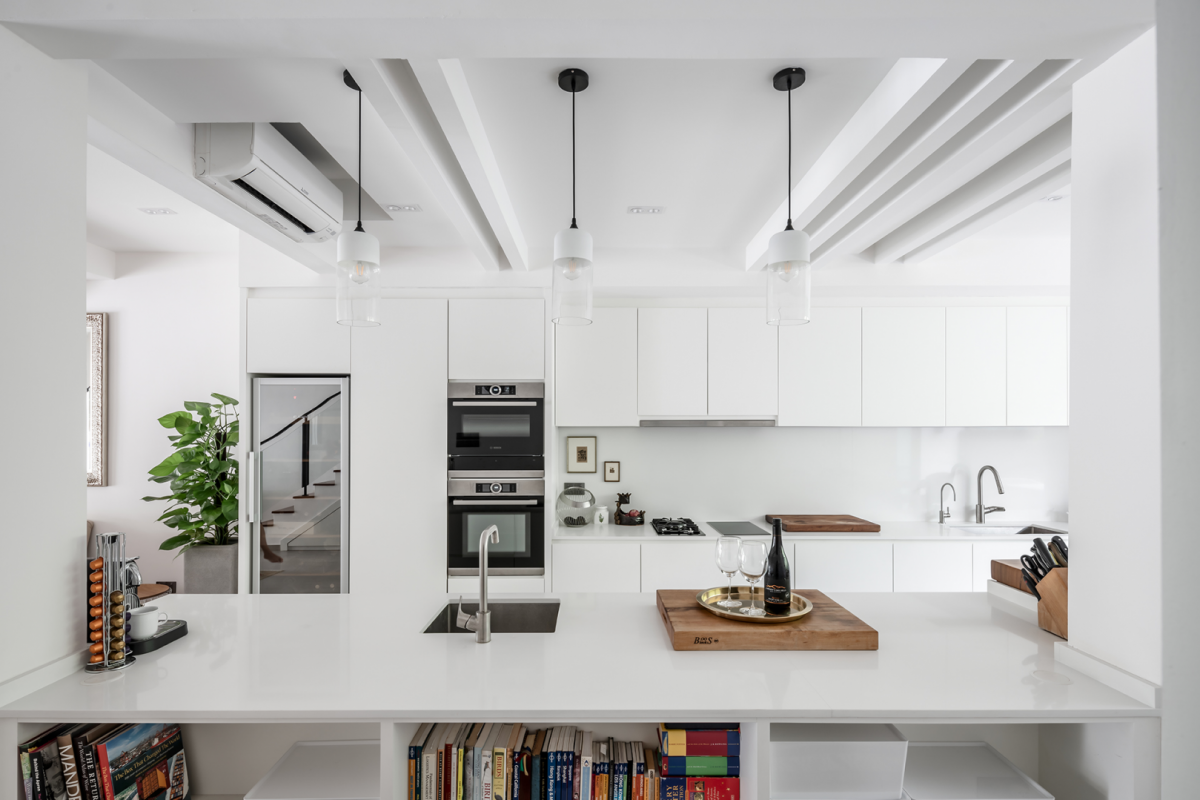
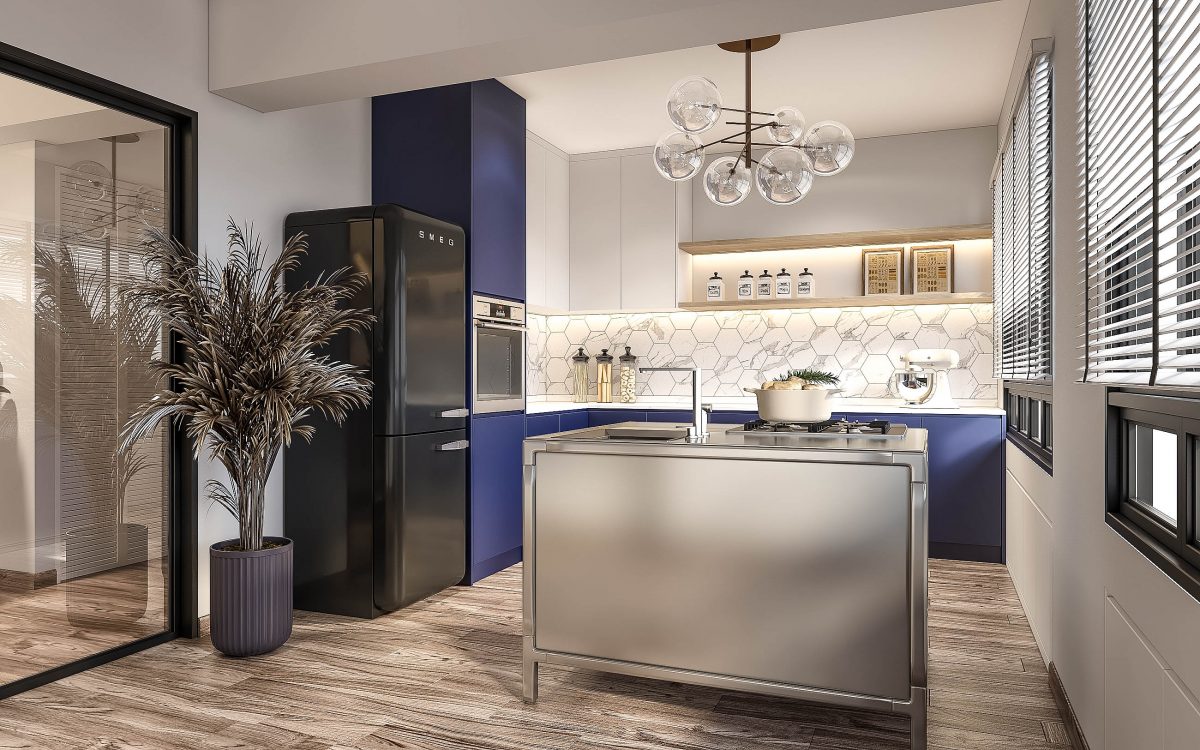
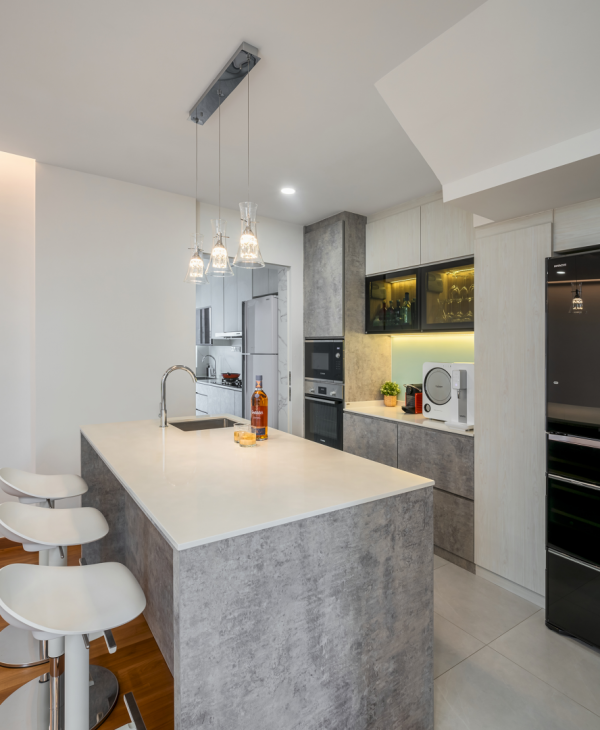
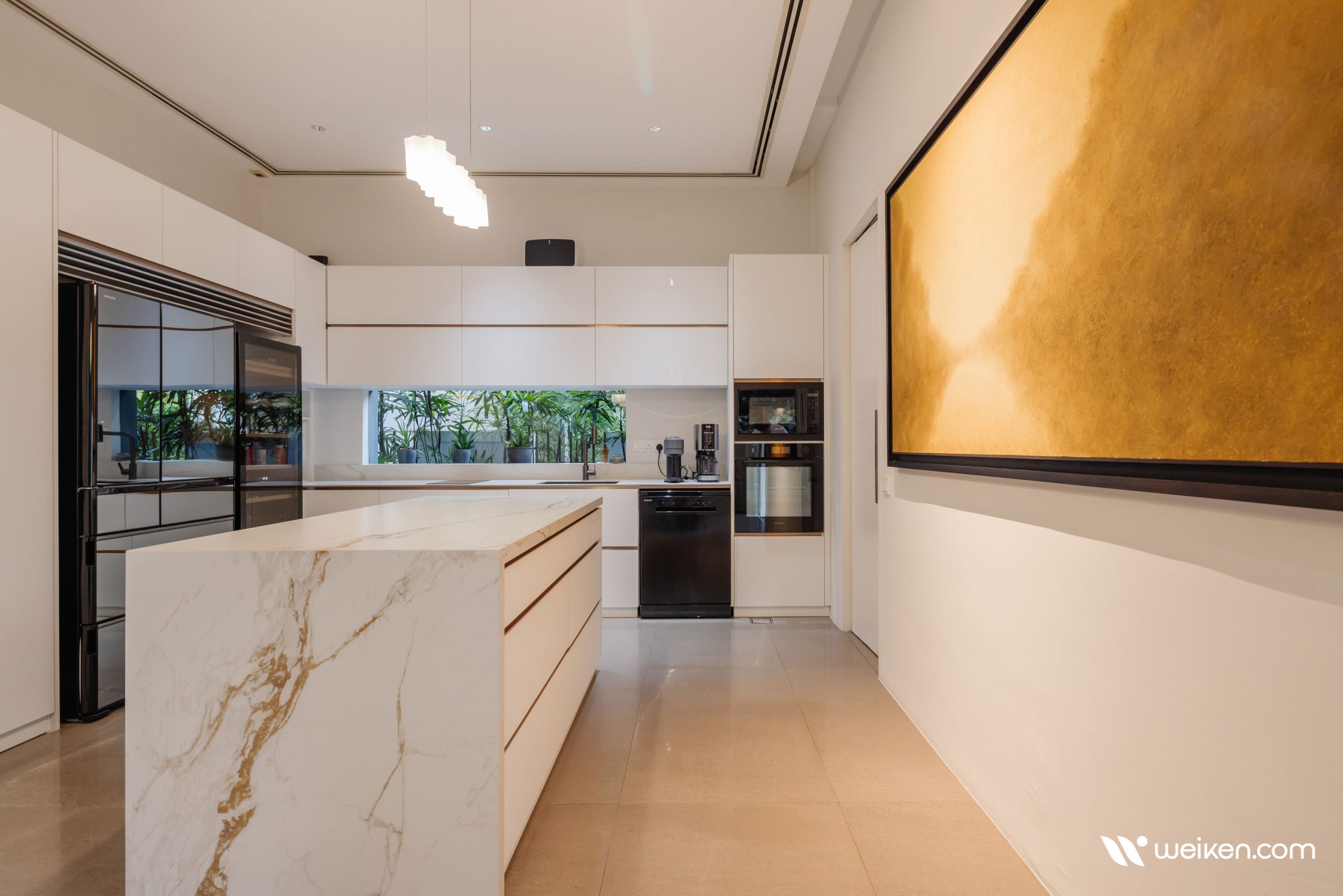
In Singapore homes, this is especially noticeable in HDB flats, where kitchen space is often limited and every square metre has to work harder. A well-planned kitchen is not simply about fitting in more cabinets and appliances. The layout needs to support an efficient work triangle or, in larger kitchens, a practical work zone arrangement between the cooking, preparation, washing and storage areas. One layout that has become increasingly popular is the kitchen island. An HDB kitchen island can serve several purposes at once: it can provide additional countertop space for food preparation, create extra storage underneath, define the boundary between the kitchen and living area, and even double as a casual dining or breakfast counter.

5-Holland-Green-3

However, an island is not automatically a good fit for every HDB kitchen. The available floor area, circulation space, existing structural constraints and location of appliances all need to be considered before adding one. An island that looks great in a showroom can quickly become a problem if it leaves insufficient clearance for cabinet doors, drawers or comfortable movement around the kitchen.

So, what exactly is a kitchen island, and how do you know whether an HDB kitchen island makes sense for your home? Let’s look at how the layout works, what you need to consider during planning, and the practical ways an island can improve a Singapore HDB kitchen.

1. KNOW YOUR KITCHEN INTIMATELY

ANDREWS-TERRACE-8

Let’s start with the very first step. You want to have an island kitchen, but does your space allow it? Where do you plan to put it? This is where you need to familiarize yourself with the intended area and take note. See if there are provisions for electricity and water. Does your intended kitchen area have big enough space? Does it have a window or at least provisions for ventilation? It helps if you write down the measurements on a piece of paper so that you can plot out certain locations. Then, assuming you are going for integrated appliances in your hdb island kitchen, take note of the size and type of appliances you will be using.

Some hdb properties have certain rules on what kind of appliance is permitted. Some of the rules could include inductions cookers being permitted or inverter refrigerators only and some others. The reason that this tip must be considered is because as much as you want to have that picture perfect and complete island kitchen, not all island kitchens will have the exact same look because of these considerations. As such, there will be certain things that will be adjusted such as the size, the materials and hardware that will be used and perhaps overall location. But this doesn’t mean you won’t have that kitchen. In fact, it gives you so many opportunities to have a unique island kitchen that will stand out from the rest.

2. SHOW STOPPING COOK AREA

439B-BUKIT-BATOK-WEST-AVE-8-e

Now that you have an idea on what to do with your intended space and the materials you will be using, it’s time to create your perfect kitchen. Have you ever watched those cooking shows like Rachel Ray or Emeril Lagasse? If you have, you’ll notice that the kind of kitchen they use is an island kitchen complete with sink and cooktop.

So why do they use that?

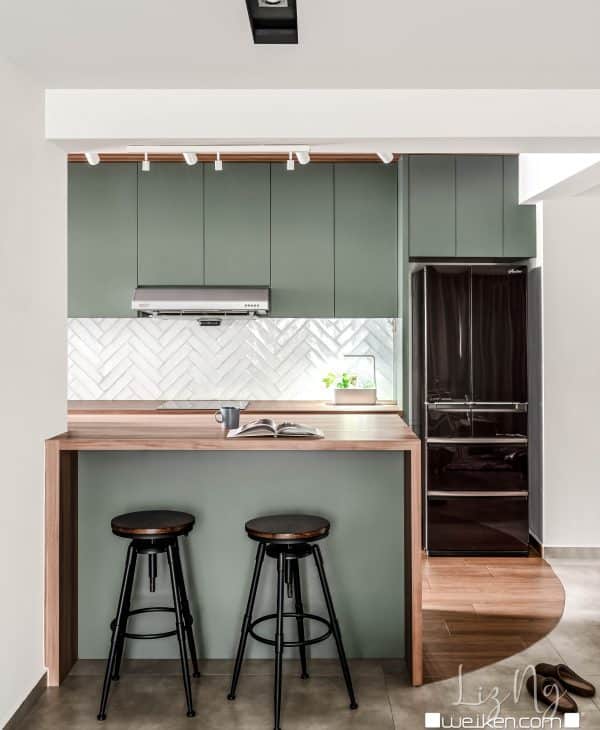
Simple, they do what is called live cooking wherein the chef prepares and cooks the food in front of the diners and serves it straight away. Take a cue from this interesting conversation starter and apply to your island kitchen. A really cool and useful feature to add to your hdb island kitchen is a breakfast nook. This can be in the form of a cantilever shelf placed either lower than the island kitchen counter or a few centimeters higher; a narrow table top supported by thin legs or even a small extension of the counter itself. Pair it with some stylish and sturdy bar chairs so that your guests can sit comfortable while enjoying a live cooking in your home.

3. STORAGE IS ESSENTIAL!

439B-BUKIT-BATOK-WEST-AVE-8-e

We have talked about space efficiency and making the most of your area. The same can be said when it comes to your island kitchen. While the rest of the kitchen cabinets have storage space, why not apply that same principle to your island.

  • You can designate the island kitchen storage for cookware that is frequently used so that when you are preparing your ingredients, it will be a lot convenient for you to reach for them.
  • You can have either  doors or drawers installed on one side of the island kitchen A really cool idea to try out is placing open shelf cubicles on either side of the island where you can store condiments, jars of pasta and sauces and even cutleries.

4. PRACTICAL SIZING

Pasir-Ris-Street-51-3

Traditionally, island kitchens tend to be quite big and rectangular in shape. In terms of balance, they tend to be equally wide as the rest of the kitchen cabinets. However, not all hdb homes have big spaces for the kitchen. Sometimes, they have smaller spaces. Again, that should never hinder you when you’re creating your kitchen. The island, believe it or not, can actually be adjusted to sit your area. Depending on how you work in the kitchen, you can designate the island as the prep area or the dining area. You can have your island kitchen in a smaller size such as it being 1500mm long or even 1200mm.

A good way to make it seem smaller and lighter is by having one side of the island kitchen be supported by a singular post. This will actually make your overall kitchen look a lot more open and minimalist. You can even make a perfect square island measuring at 1000mm with a foldable countertop that can open out to a wider safe.

5. ROLL AWAY ISLAND!

BLK-742-WOODLANDS-CIRCLE-5

What do you get when you combine functionality, portability and the island kitchen? You get a one of a kind island kitchen that serves as a prep station and when you need the kitchen floor space, simply unclip the wheel locks and roll the island kitchen to the sides and convert it into a buffet.

This idea makes the HDB island kitchen something of a convertible and versatile piece of furniture. Especially if your HDB home is quite small and the idea of having limited floor space is out of the question. You can even add an extendable or foldable countertop.

6. INTEGRATED DINING

587-Woodlands-Drive-6-2
EASTWOOD-TERRACE-c

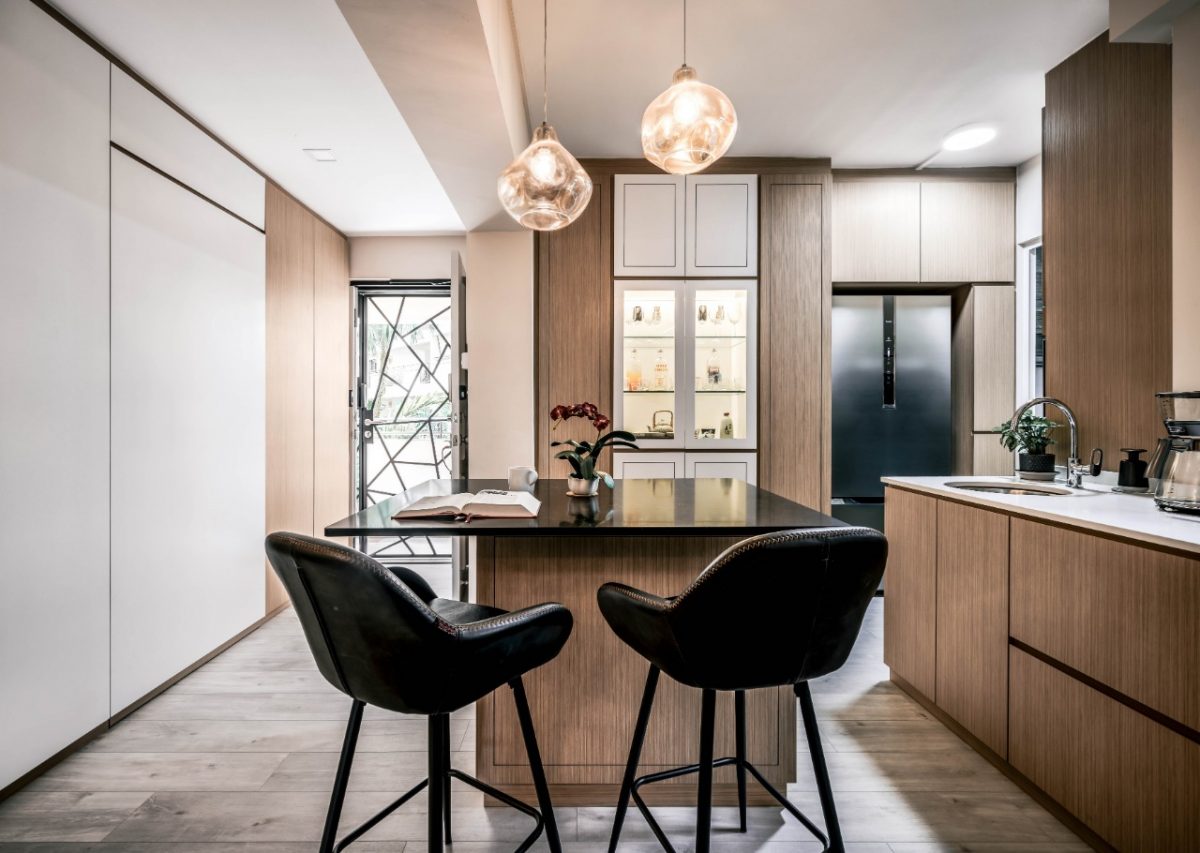
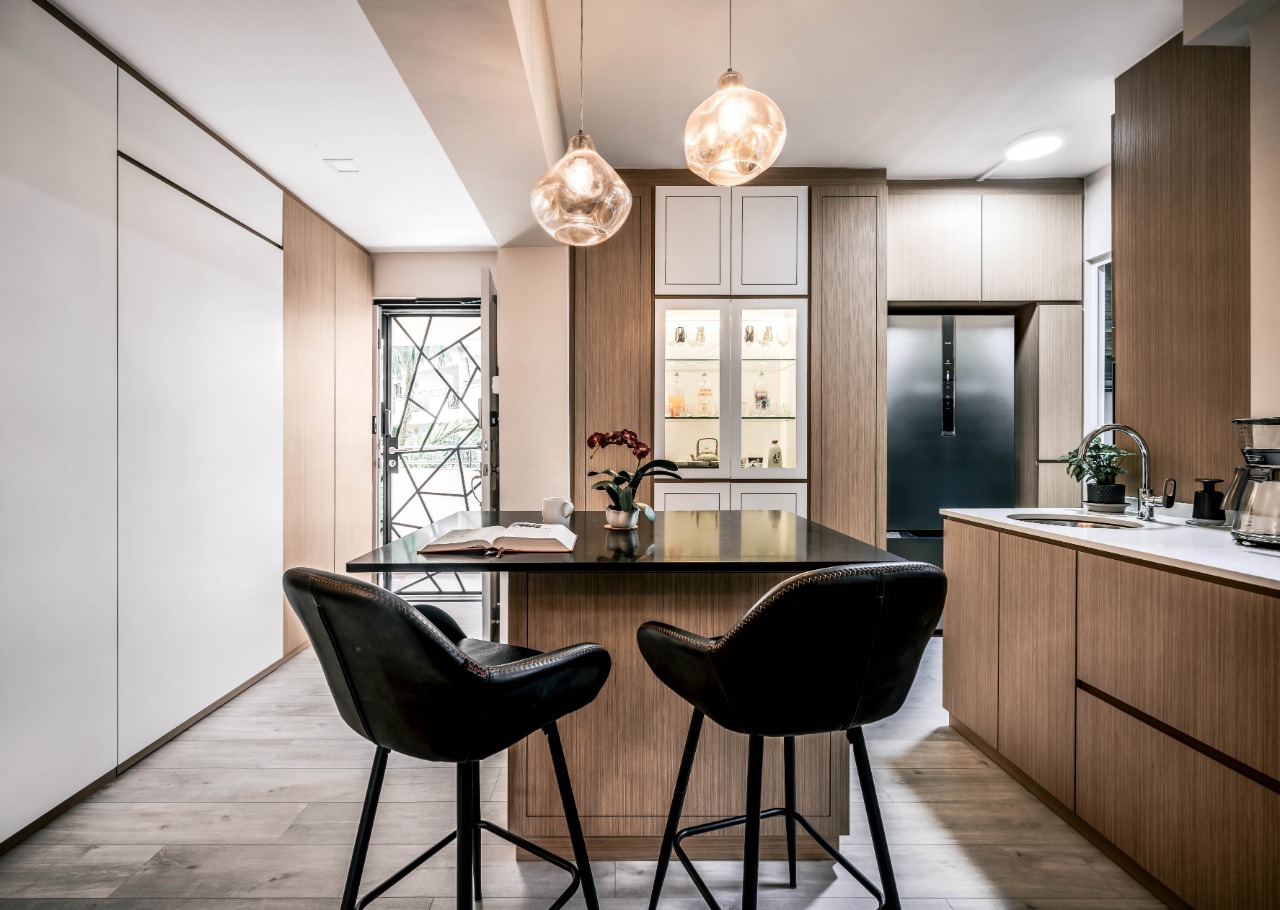
While we are on the subject of maximizing space, most hdb homes have little space for a full dining set and more often than not, some opt to do away with having a full dining set. But what if you could incorporate the dining set to your kitchen island? As of late, that is what most designers and homeowners are doing. One side of the kitchen island jots out into a dining table. You can either make your dining area as low as 750mm or as high as 1000mm.

You can use either regular dining chairs or even bar chairs depending on the height of your dining area. Your dining can also become your working area. This is quite popular with households that have children who often study together and often invite their friends over for either studying or having afternoon snacks; with the kitchen being conveniently close.

7. WHEN IN DOUBT, IT’S OKAY TO ASK HELP

The-Centris-3

You may have the idea in your head, but when it comes to executing the final look, you might hit a hard wall. Literally and figuratively. When in doubt, it is perfectly alright to seek professional services. There are many designers in Singapore who specialize in creating space efficient and spectacular looking island kitchens.

For HDB island kitchen projects, it is advisable to consult with property recommended designers as they are familiar with the property rules and regulations when it comes to renovation and construction. Apart from that, they have years of experience with other HDB properties and can apply those experiences when executing and creating your one of a kind island kitchen.

587-Woodlands-Drive-6-2

Kitchen Open Concept in Singapore (The Complete Guide 2026)

Introduction About Kitchen Open Concept
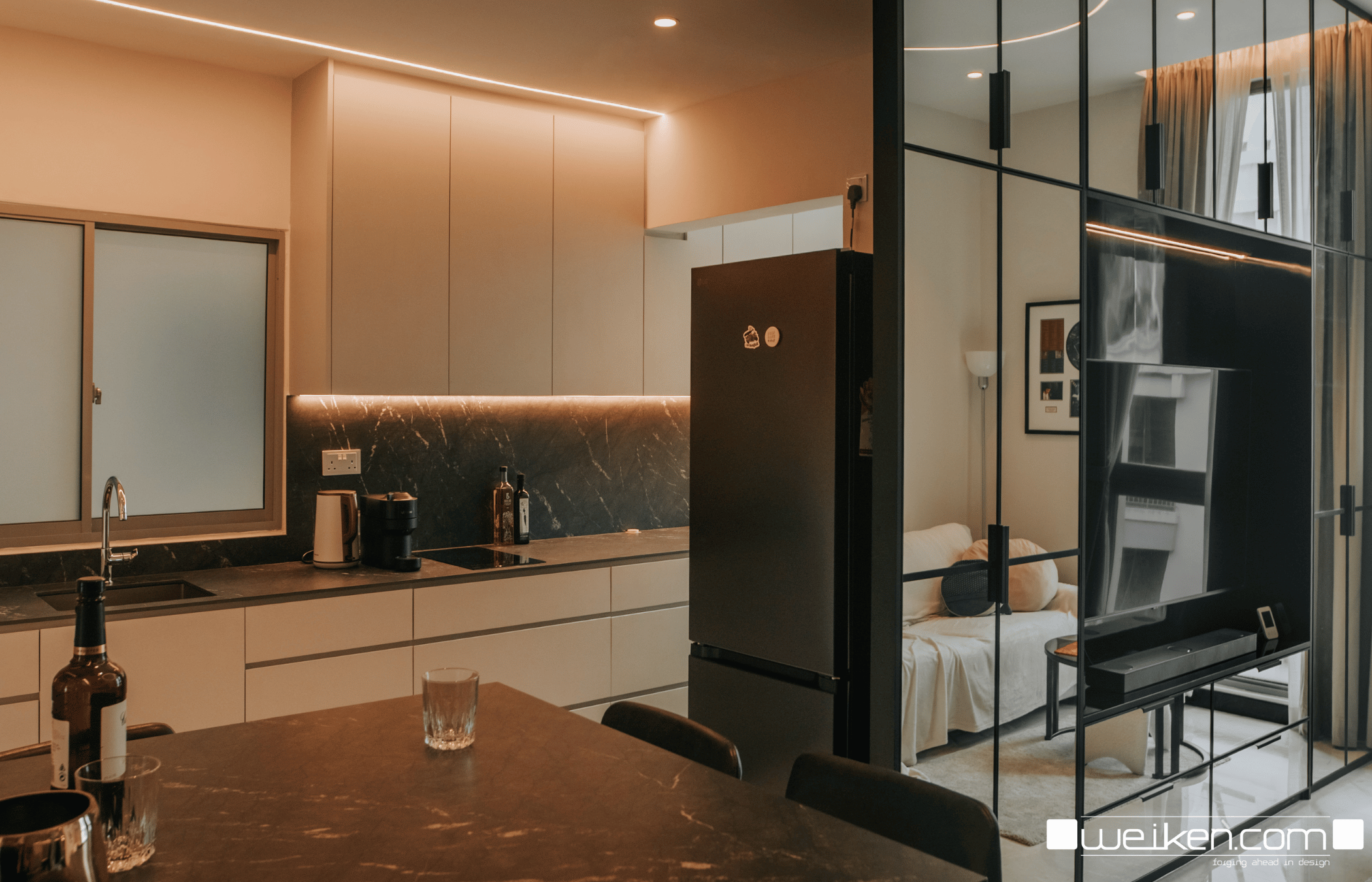
9 Oxley Rise-3

For years, the kitchen open concept has been one of the most requested renovation styles in Singapore. But if you think it simply means knocking down a wall between the kitchen and living room, you’re about five years behind. In 2026, Singapore homeowners are designing kitchens very differently. The goal is no longer to create the “biggest” kitchen. Instead, people want a kitchen that feels connected to the rest of the home without sacrificing practicality. That means smarter zoning, cleaner storage, quieter appliances, better ventilation, and materials that can actually survive Singapore’s humidity and daily cooking habits. An open kitchen has become less of a luxury feature and more of a lifestyle decision.

Why Kitchen Open Concepts Continue to Dominate Singapore Homes

Unlike landed houses overseas, most Singapore homes work with limited square footage. Every wall you remove changes how the entire home feels. This is exactly why open kitchens have become so popular across HDBs and condominiums.

A well-designed kitchen open concept can:

  • Make a 90 sqm home feel significantly larger
  • Allow natural light to travel throughout the apartment
  • Improve cross ventilation
  • Create better interaction between cooking, dining and living spaces
  • Increase visual value without increasing floor area
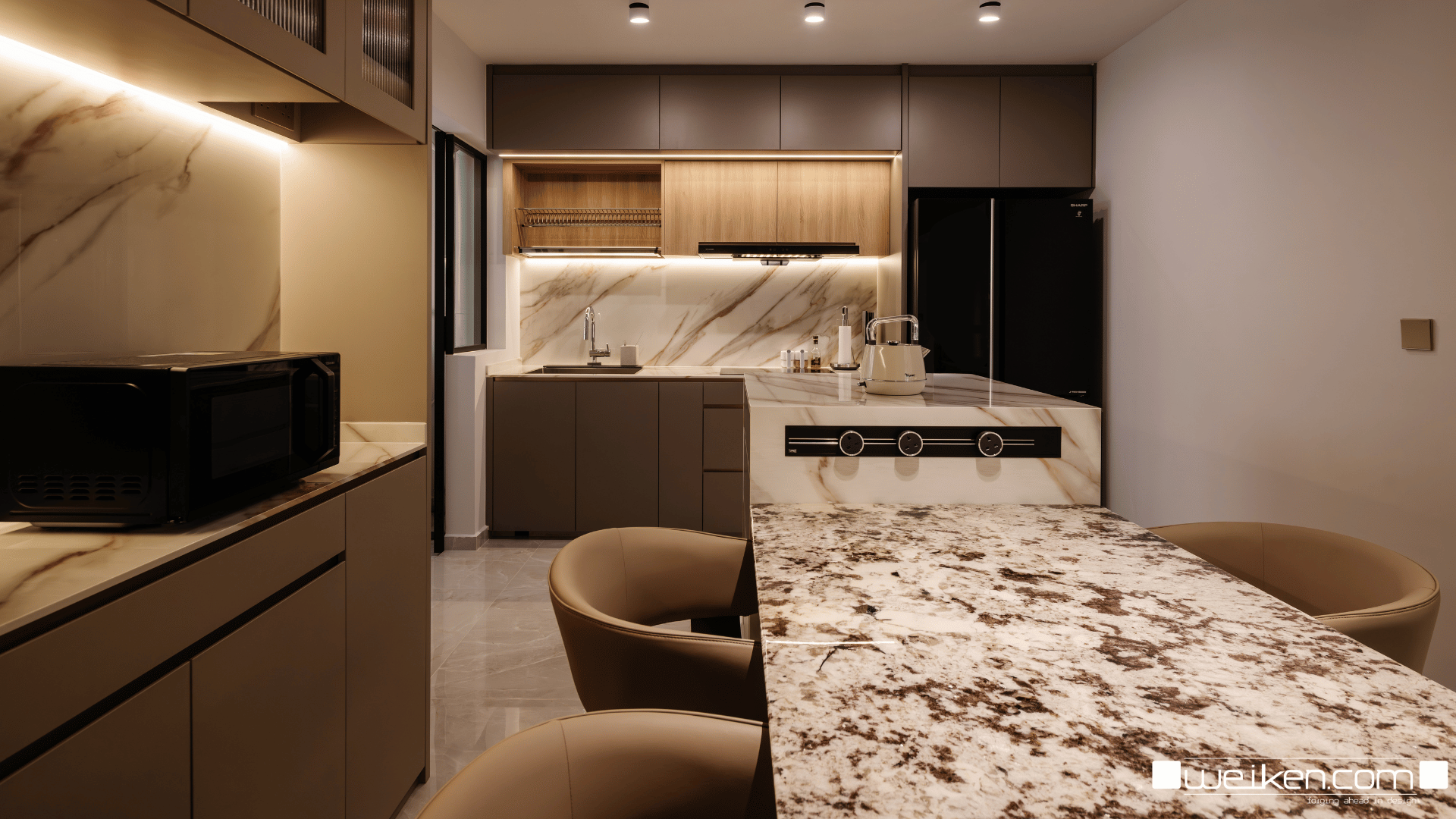
216A Bidadari Park Drive-4

This explains why almost every modern BTO showflat now incorporates some form of open-plan kitchen or semi-open kitchen design. However, there is an important shift happening in 2026. Designers are actually moving away from completely exposed kitchens. Instead, they’re creating “controlled openness”. That means the kitchen still feels connected to the living room, but cooking smells, visual clutter and appliance noise stay where they belong. It’s a far more practical solution for Singaporean households that still cook Asian cuisine regularly.

The Best Kitchen Open Concept Layouts for Singapore Homes
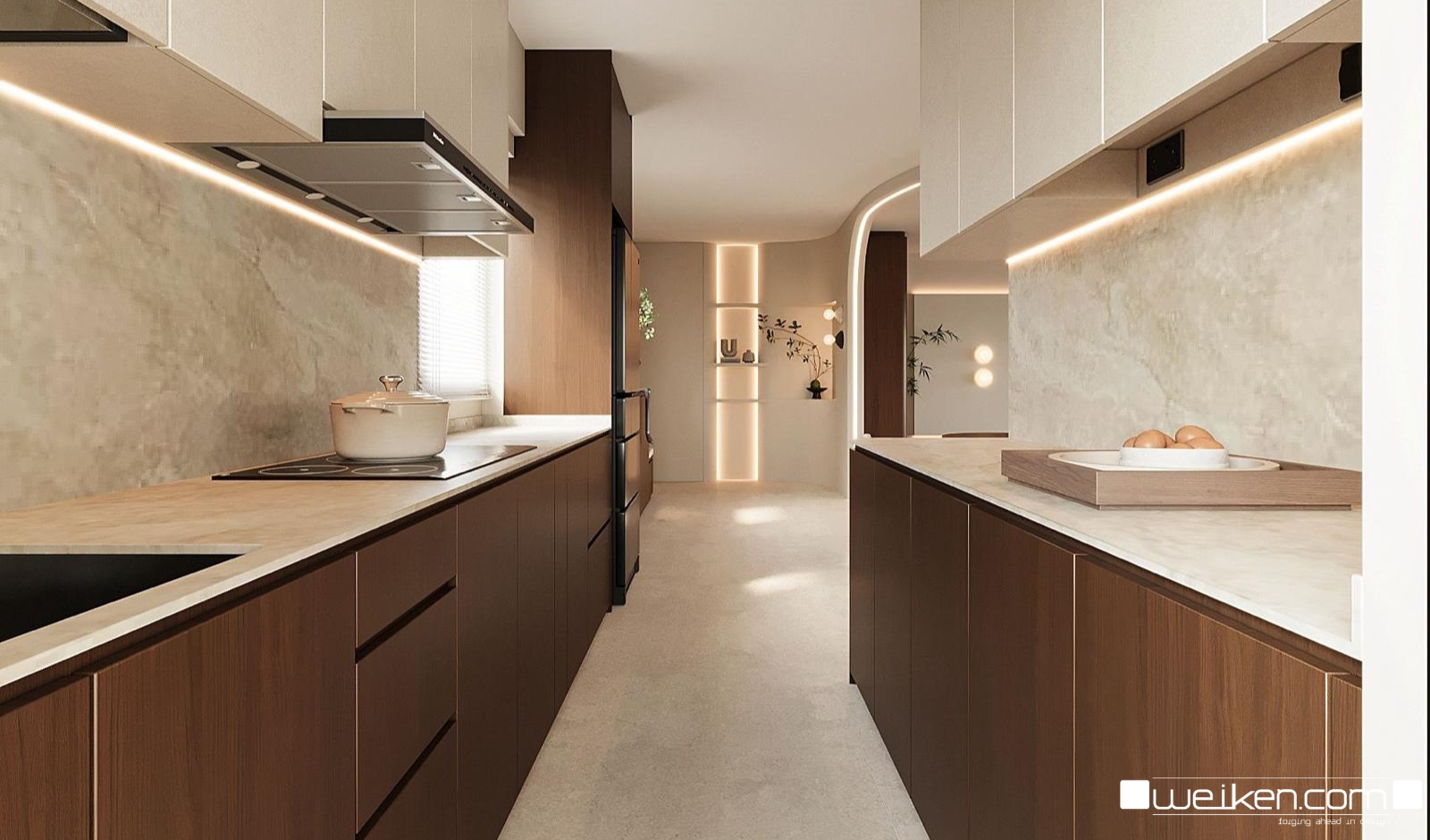
272C PUNGGOL WALK-5

Choosing the right kitchen layout is far more important than choosing cabinet colours or countertop materials. A beautiful kitchen that interrupts your daily routine quickly becomes frustrating to use, while a well-planned layout can make even a compact BTO kitchen feel surprisingly effortless.

One misconception many homeowners have is that every open kitchen should include an island. That’s rarely true in Singapore. Unlike larger homes in Australia or North America, most HDB flats and condominiums simply don’t have enough circulation space to accommodate a full-sized island comfortably. In many cases, squeezing one into the layout actually makes the kitchen feel smaller and harder to work in. Below are the layouts that continue to perform best across Singapore homes.

1. L-Shaped Kitchen: Still the Smartest Choice for Most HDB Flats
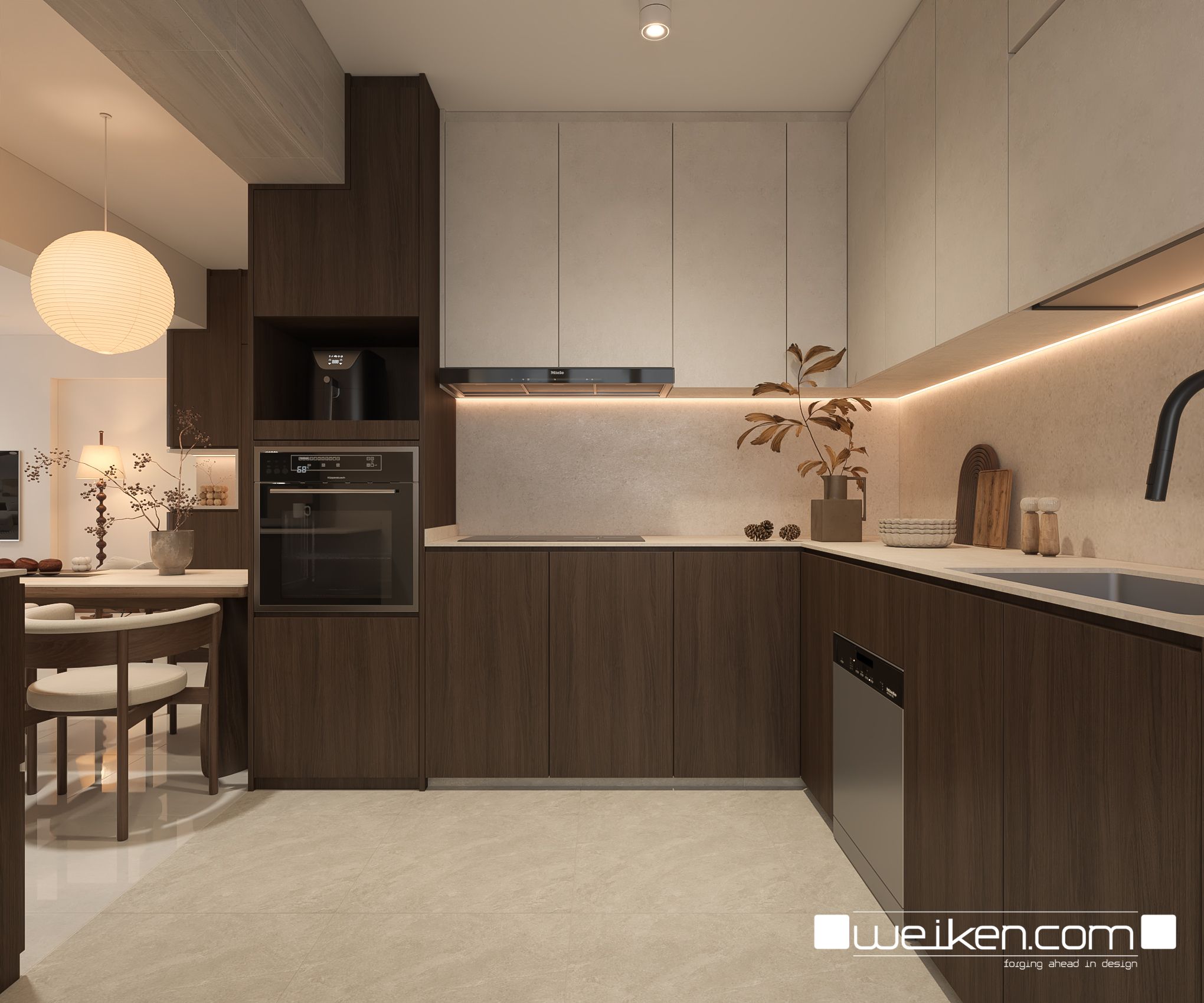
141B MCNAIR ROAD-4

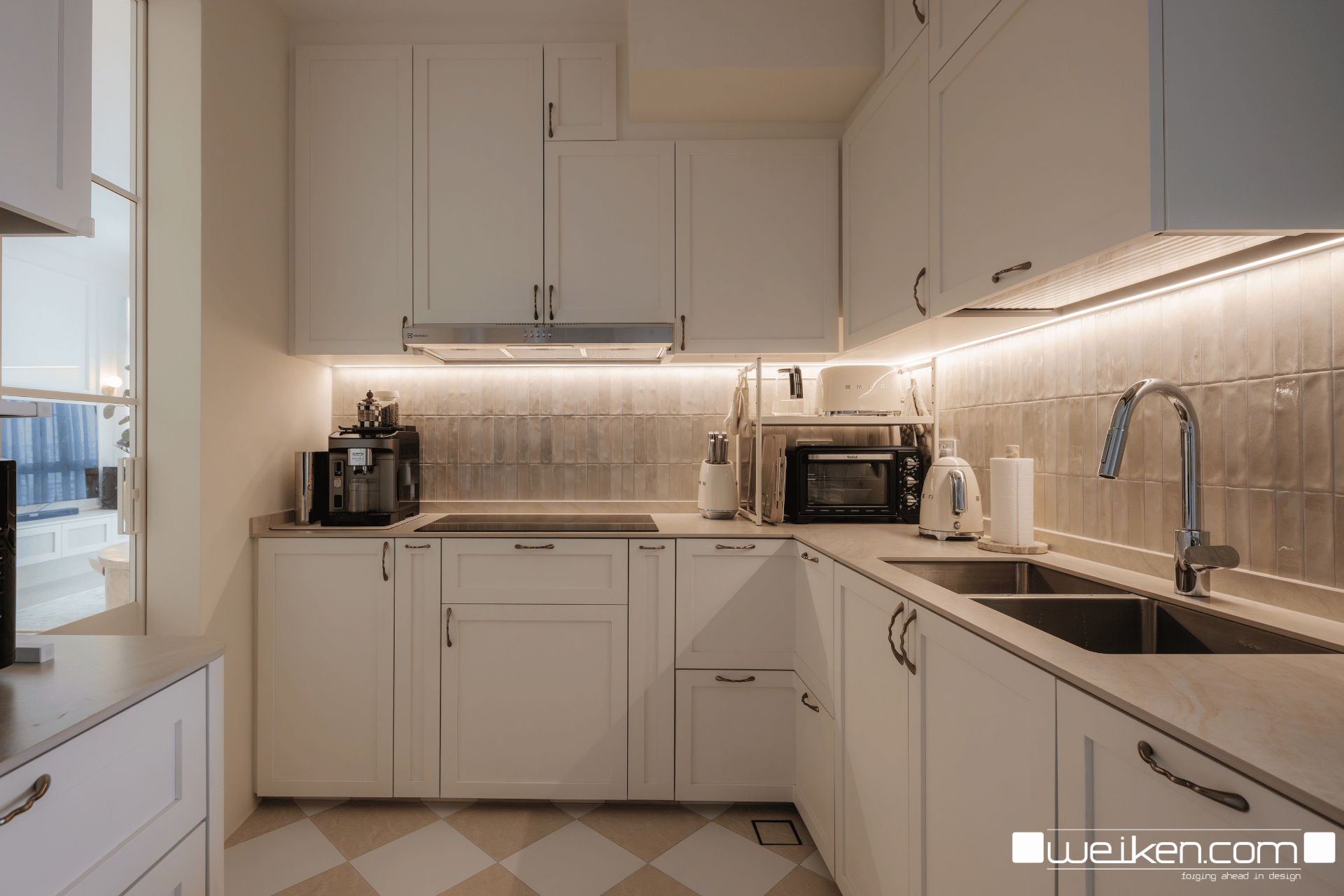
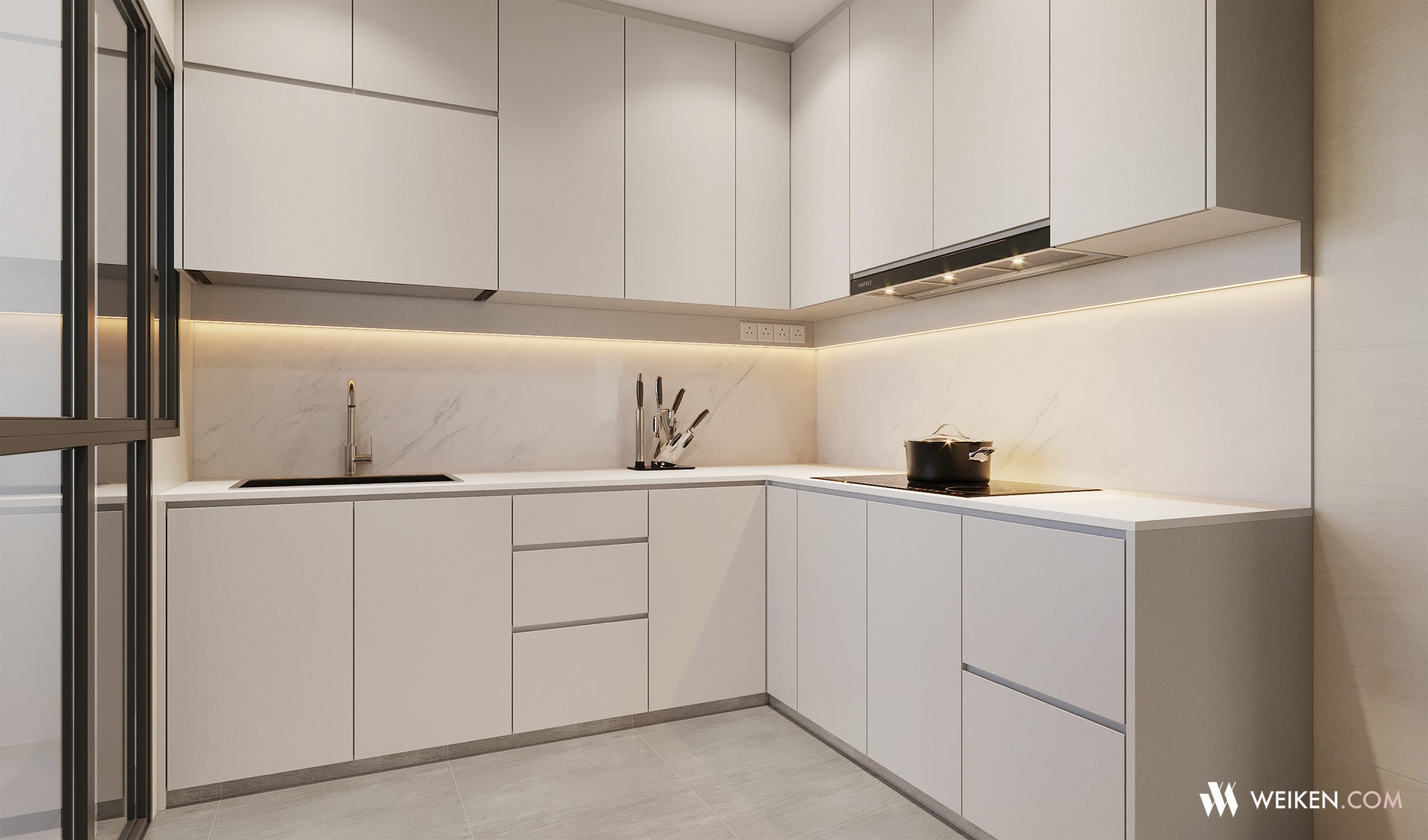
If there is one layout that consistently works across almost every HDB configuration, it’s the classic L-shaped kitchen. The reason is simple. It offers an excellent balance between functionality and efficient use of floor space without overwhelming smaller apartments. Whether you’re renovating a 4-room BTO, a resale flat, or a condominium with an open-plan living area, an L-shaped configuration is usually the safest place to start.

Instead of lining cabinets across three or four walls, the kitchen occupies two adjoining walls, leaving the remaining space visually open. This immediately creates a stronger connection between the kitchen, dining area and living room, making the home feel noticeably more spacious.

For many Singapore families, this also means parents can prepare dinner while keeping an eye on children doing homework or watching television nearby. It’s a small lifestyle improvement that becomes surprisingly valuable over time.

(*) Why designers continue recommending L-shaped kitchens?

The popularity of this layout isn’t driven by trends. It’s driven by efficiency. A properly designed L-shaped kitchen naturally supports what designers refer to as the “work triangle”, the relationship between the refrigerator, sink and cooking hob. When these three elements are positioned within comfortable walking distance, meal preparation becomes smoother with fewer unnecessary steps.

At the same time, the open corner creates opportunities that other layouts often cannot. Depending on available space, that corner can become:

  • a casual breakfast counter
  • a compact coffee station
  • additional preparation space
  • extra drawers for cookware
  • seating for quick weekday meals
  • a visual transition between the kitchen and living area
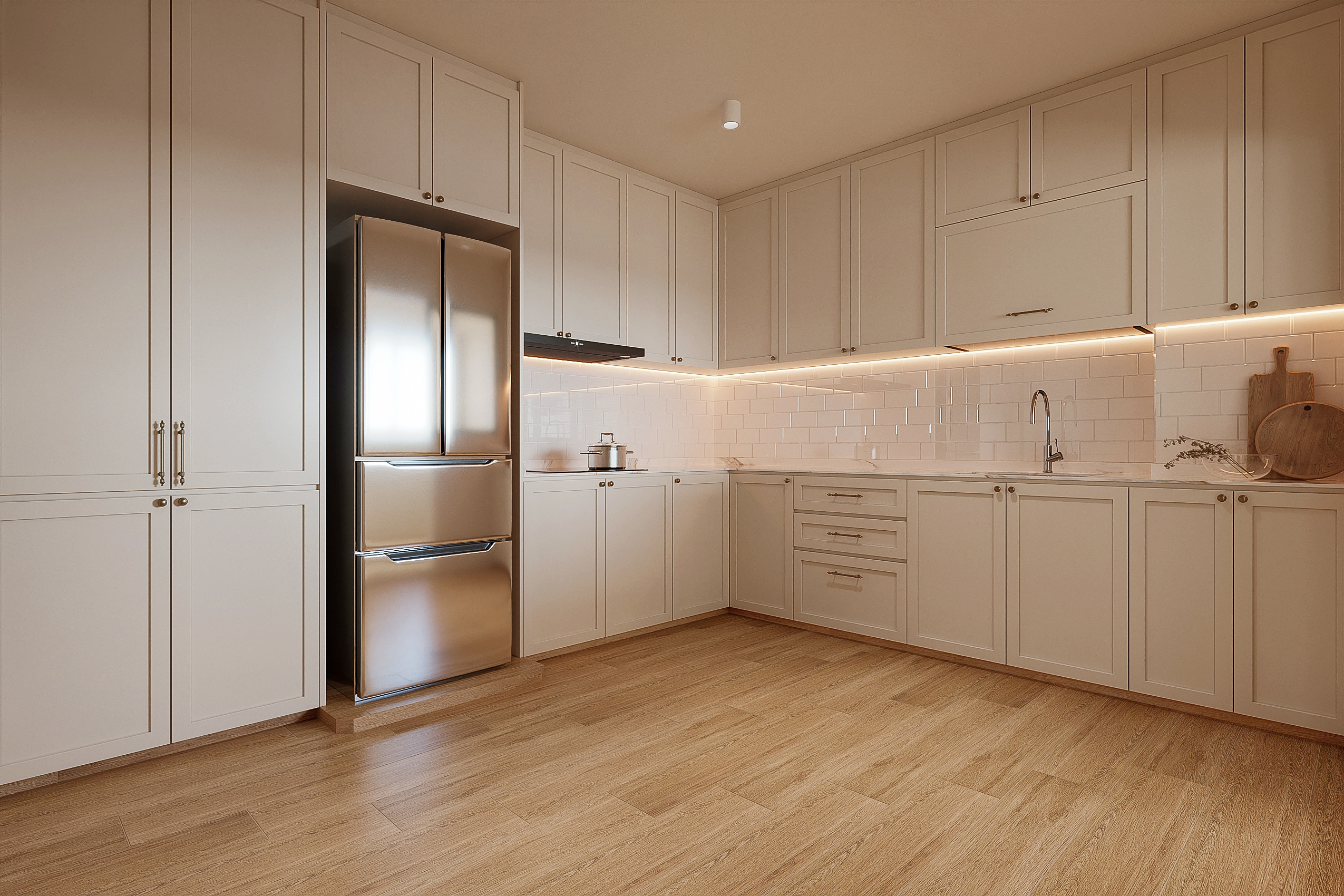
648-Woodlands-4

Many homeowners initially think this area should remain empty to create openness. In reality, experienced designers usually maximise it because every centimetre matters inside an HDB flat.

(**) Common design mistakes

Ironically, the biggest mistake isn’t making the kitchen too small. It’s trying to fit too much into it. Large farmhouse sinks, oversized refrigerators and commercial-style cooker hoods may look impressive on Pinterest, but they often throw the entire layout out of proportion.

For example, a 900 mm-wide refrigerator beside a standard kitchen entrance can visually dominate the room while reducing usable countertop space. Likewise, choosing a deep island simply because it looks luxurious often leaves an awkward passageway that everyone has to squeeze through.

A better approach is to prioritise uninterrupted work surfaces. Most designers would rather sacrifice a little cabinet storage than lose valuable preparation space between the sink and hob, the area that’s used hundreds of times each month.

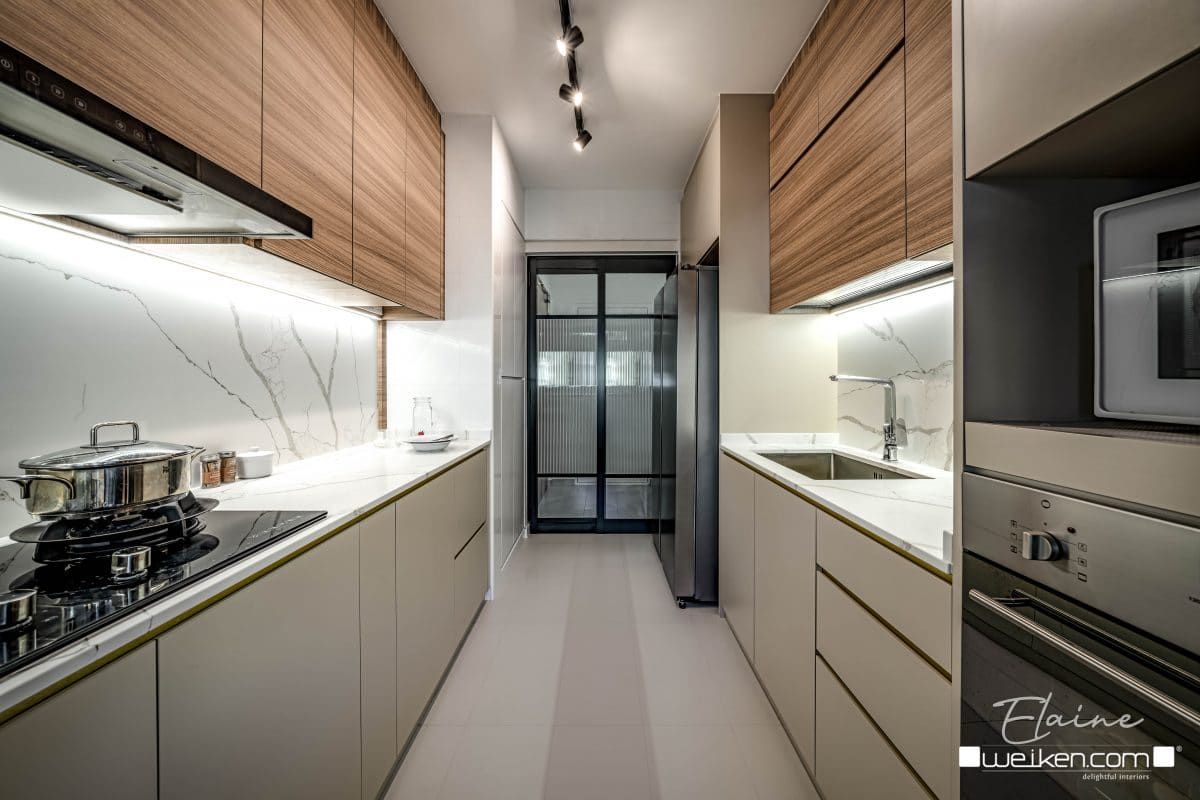
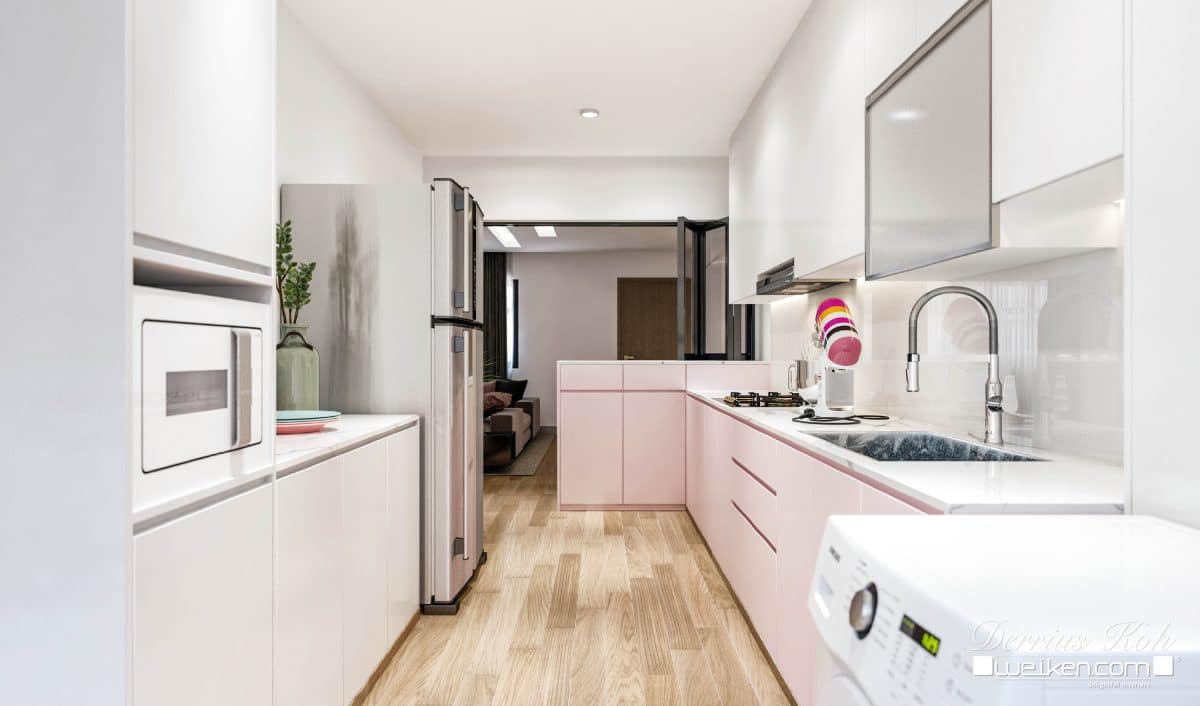
2. Galley Kitchen: The Most Underrated Layout in Singapore
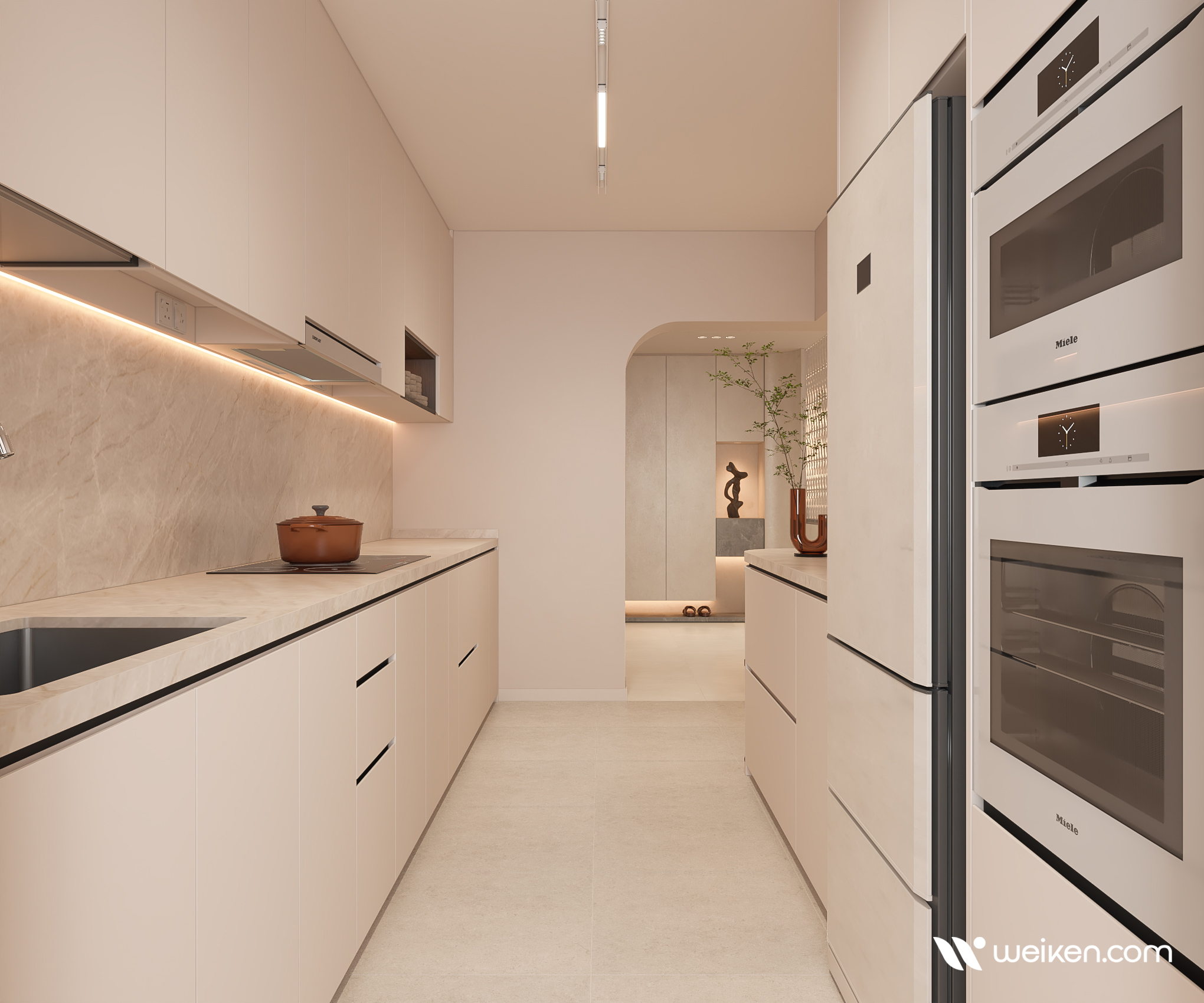
325A-Tengah-Garden-Walk-5

Mention a galley kitchen, and many homeowners immediately imagine a narrow, cramped corridor. That’s an outdated perception. In reality, the modern galley kitchen has become one of the most efficient layouts for compact Singapore homes, particularly where structural walls limit renovation possibilities.

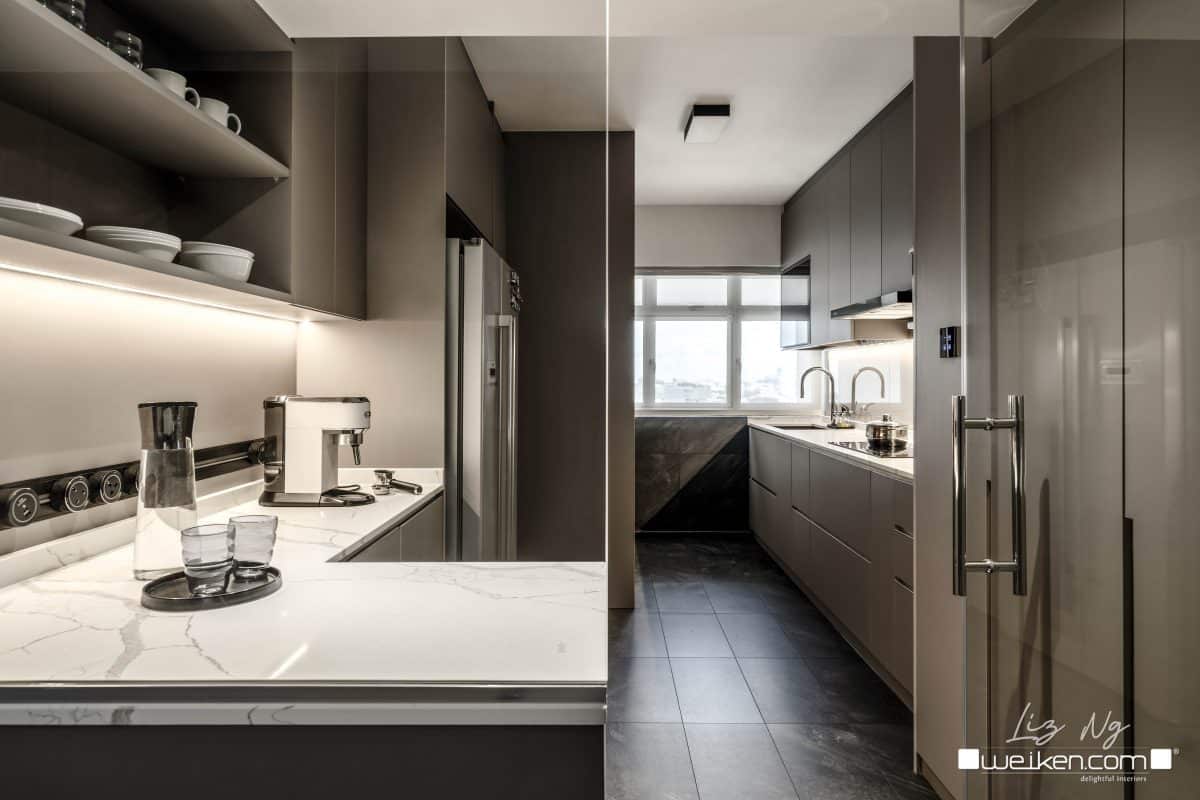
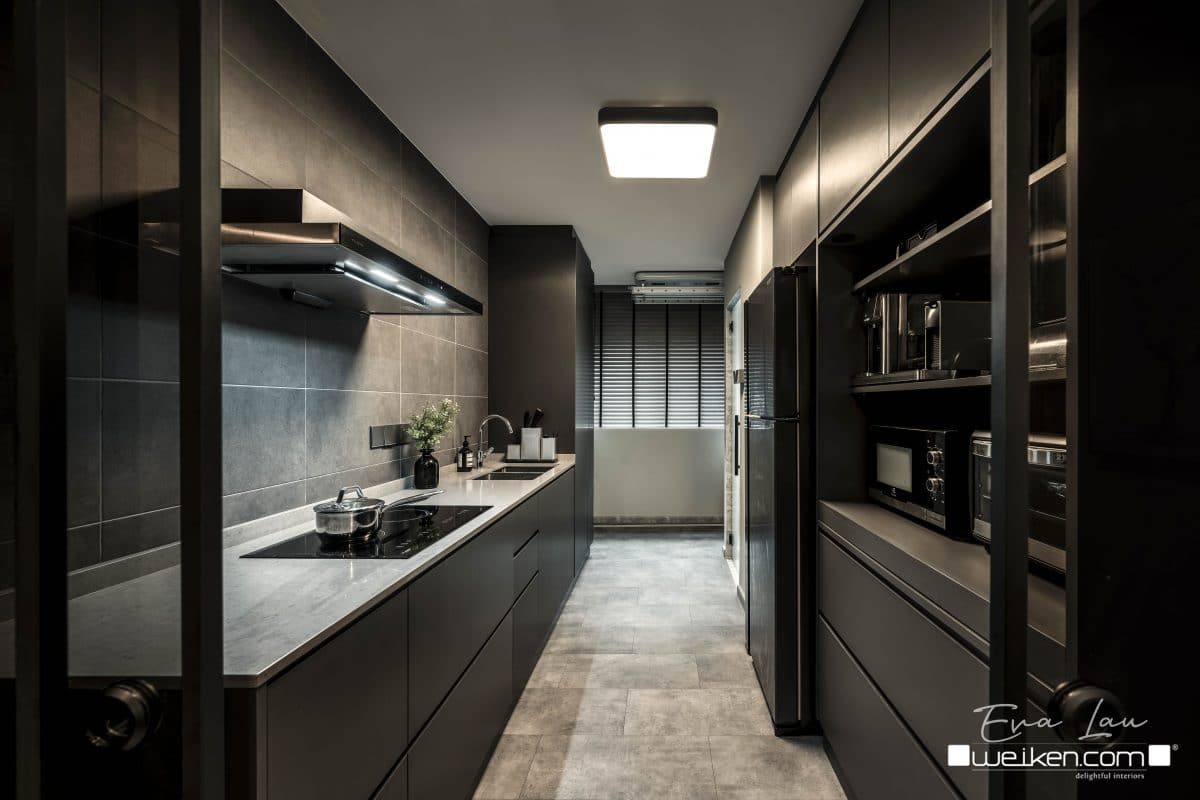
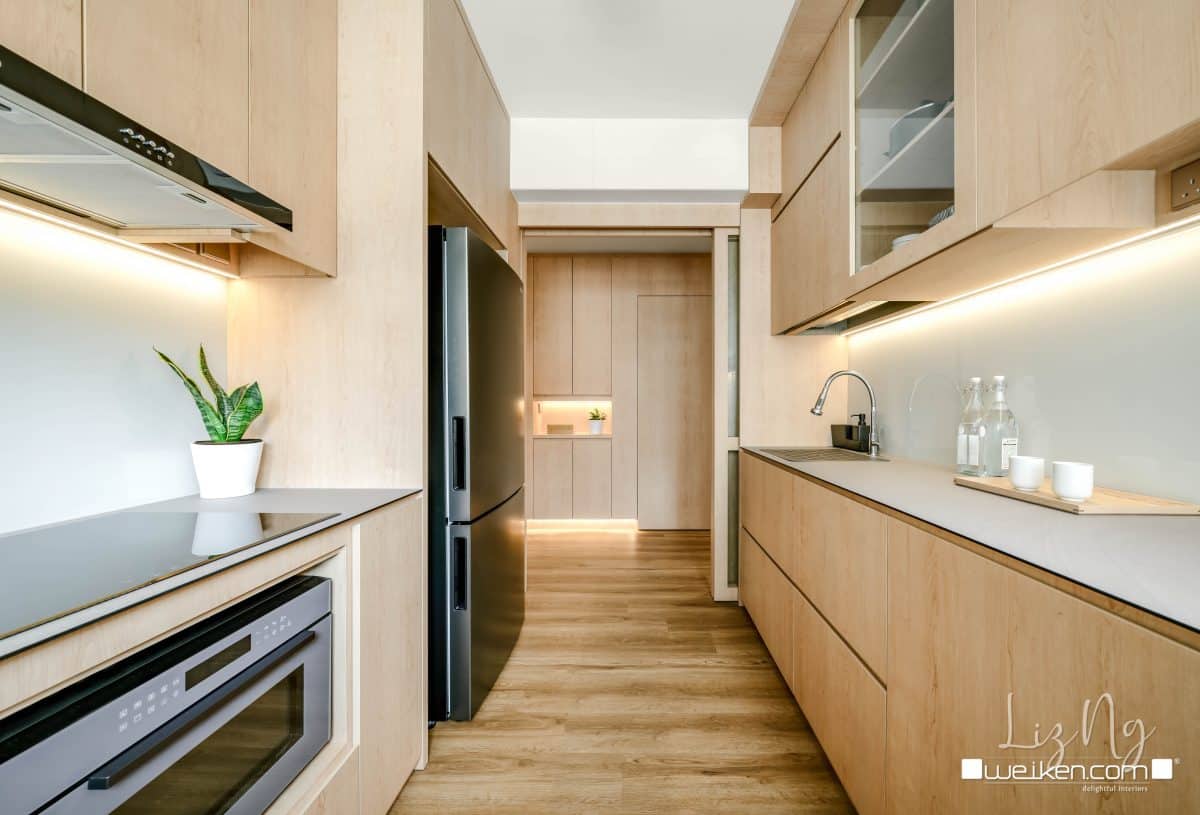
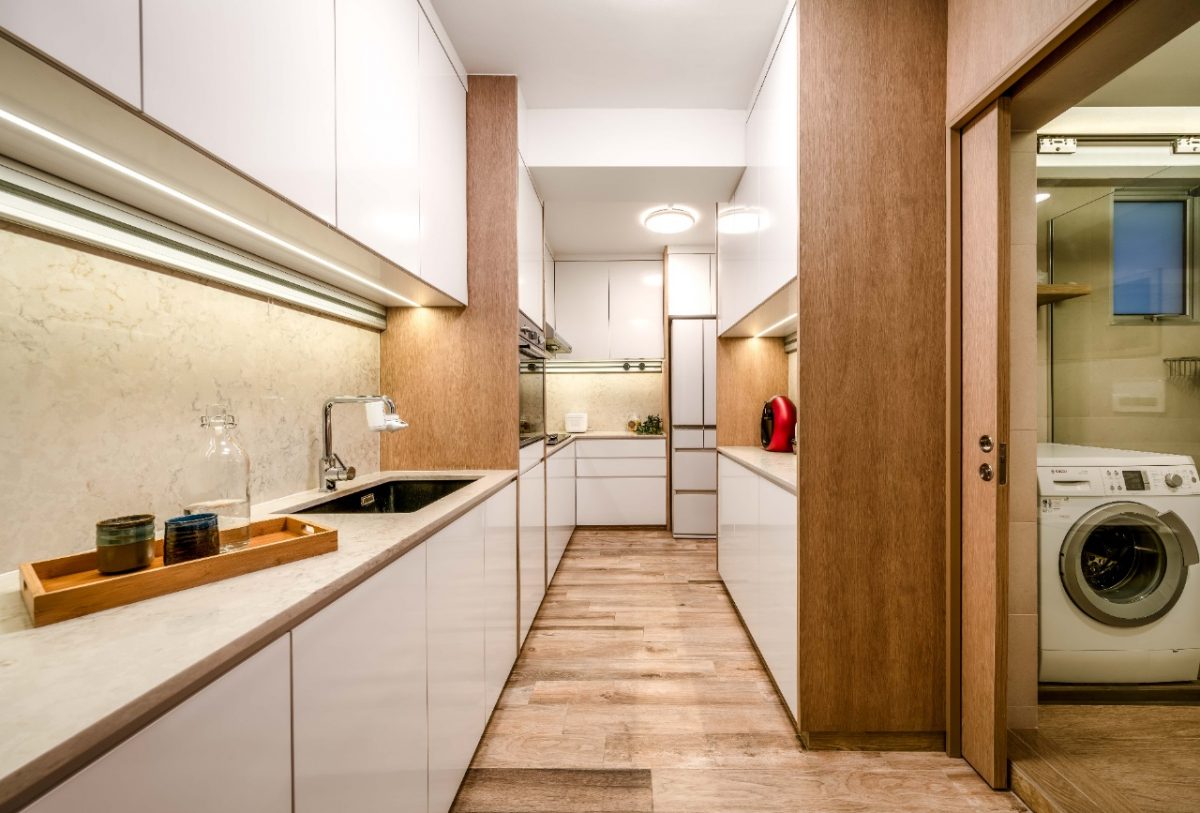
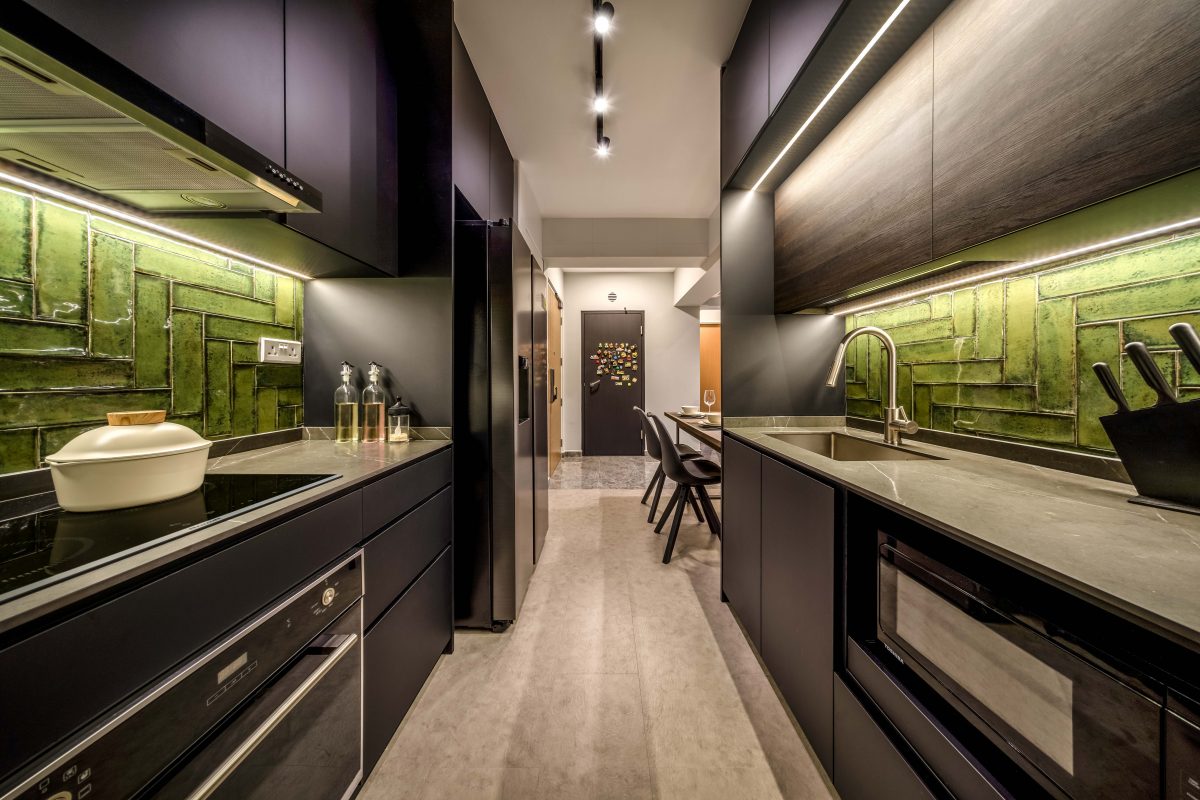
A galley kitchen consists of two parallel runs of cabinetry separated by a central walkway. While the design may appear simple, it creates one of the shortest working distances between cooking, washing and food preparation zones. Professional chefs have relied on this layout for decades because everything is within easy reach. For homeowners who cook daily, that efficiency translates into less walking, less turning and a noticeably smoother cooking experience.

(*) How wide should the walkway be?

One detail that’s frequently overlooked is circulation space. Many homeowners focus on cabinet dimensions while forgetting that people actually need room to move.

As a general guideline:

Walkway Width Practicality
Less than 900 mm Feels cramped and difficult for two people
1,000–1,100 mm Comfortable for everyday cooking
1,100–1,200 mm Ideal for households where two people cook together
Above 1,300 mm Often wastes valuable floor space in smaller homes

Contrary to popular belief, wider isn’t always better. If the walkway becomes excessively wide, you’ll spend more time walking from one side of the kitchen to the other. Designers often describe this as “breaking the workflow.”
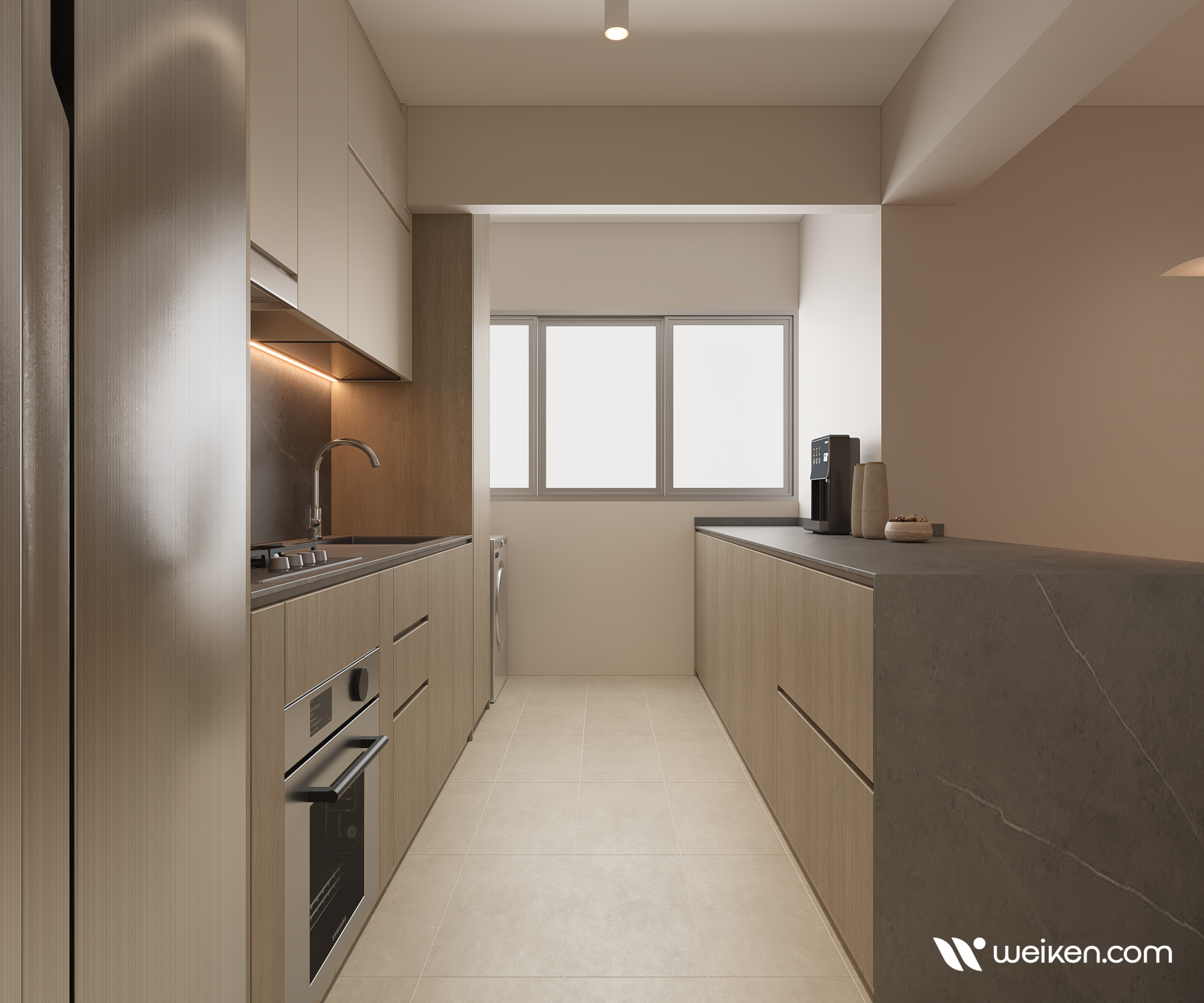
589C-Pasir-Ris-Drive-3-5

(**) Why homeowners are choosing galley kitchens again?

One interesting trend emerging across Singapore in 2026 is the integration of tall storage along one side of the galley. Instead of mixing upper and lower cabinets everywhere, designers now dedicate an entire wall to full-height cabinetry. This wall typically conceals:

  • refrigerator
  • pantry
  • microwave
  • steam oven
  • wine storage
  • appliance garage
  • pull-out larder
  • hidden utility cupboard

Meanwhile, the opposite side remains visually lighter with only base cabinets and open shelving. The result is a kitchen that feels far less cluttered despite offering significantly more storage than older designs. This approach also helps maintain clean sightlines from the living room, something that’s increasingly important in open-concept homes where the kitchen is visible almost all the time.

3. Peninsula Kitchen: The Island Alternative That’s Taking Over Singapore
St Patrict Road-3

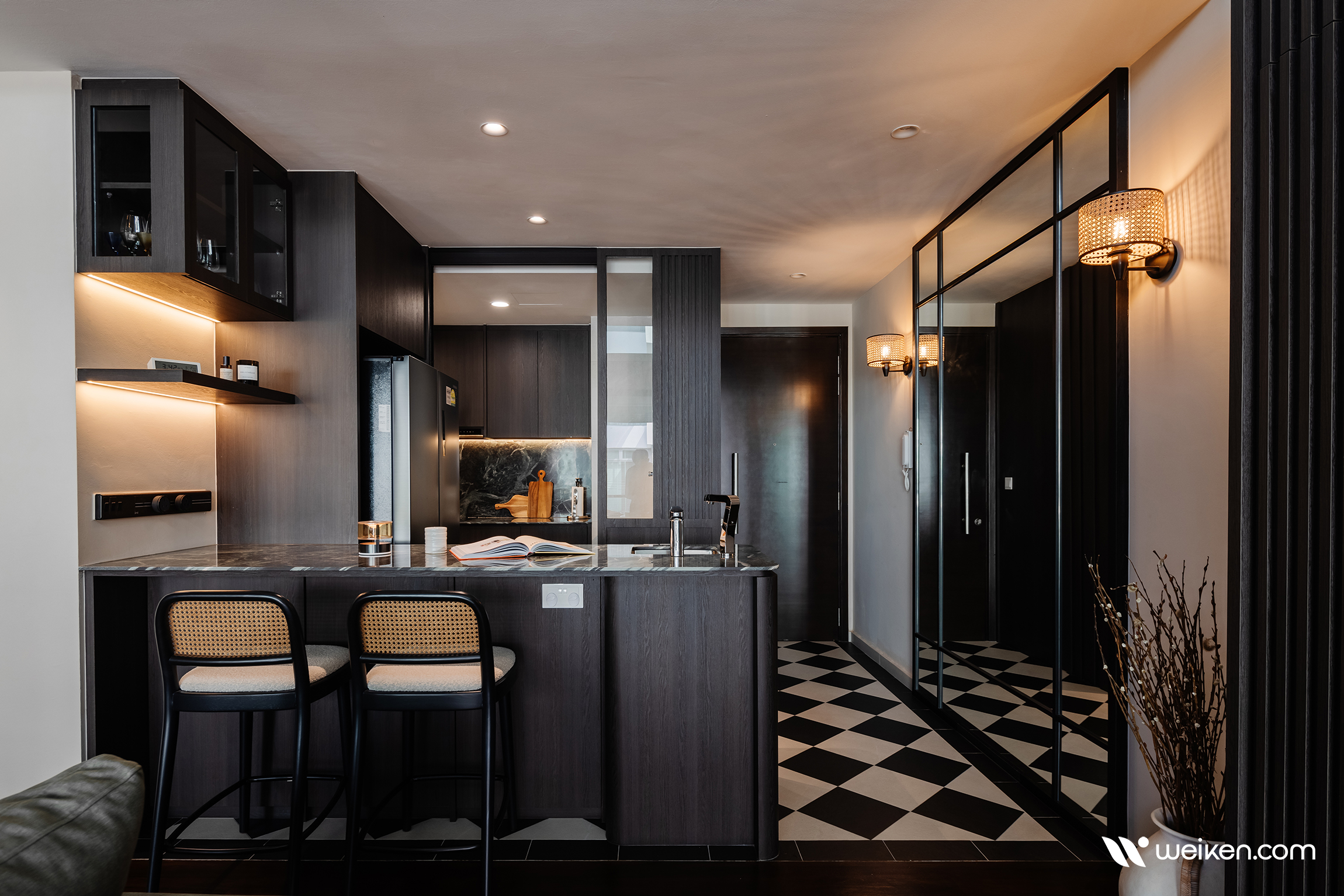
If there’s one design trend that’s quietly replacing traditional kitchen islands across Singapore, it’s the peninsula. Many homeowners still ask their interior designer for an island because it feels luxurious. Then reality sets in. After accounting for circulation clearance, appliance doors and dining furniture, there simply isn’t enough room.

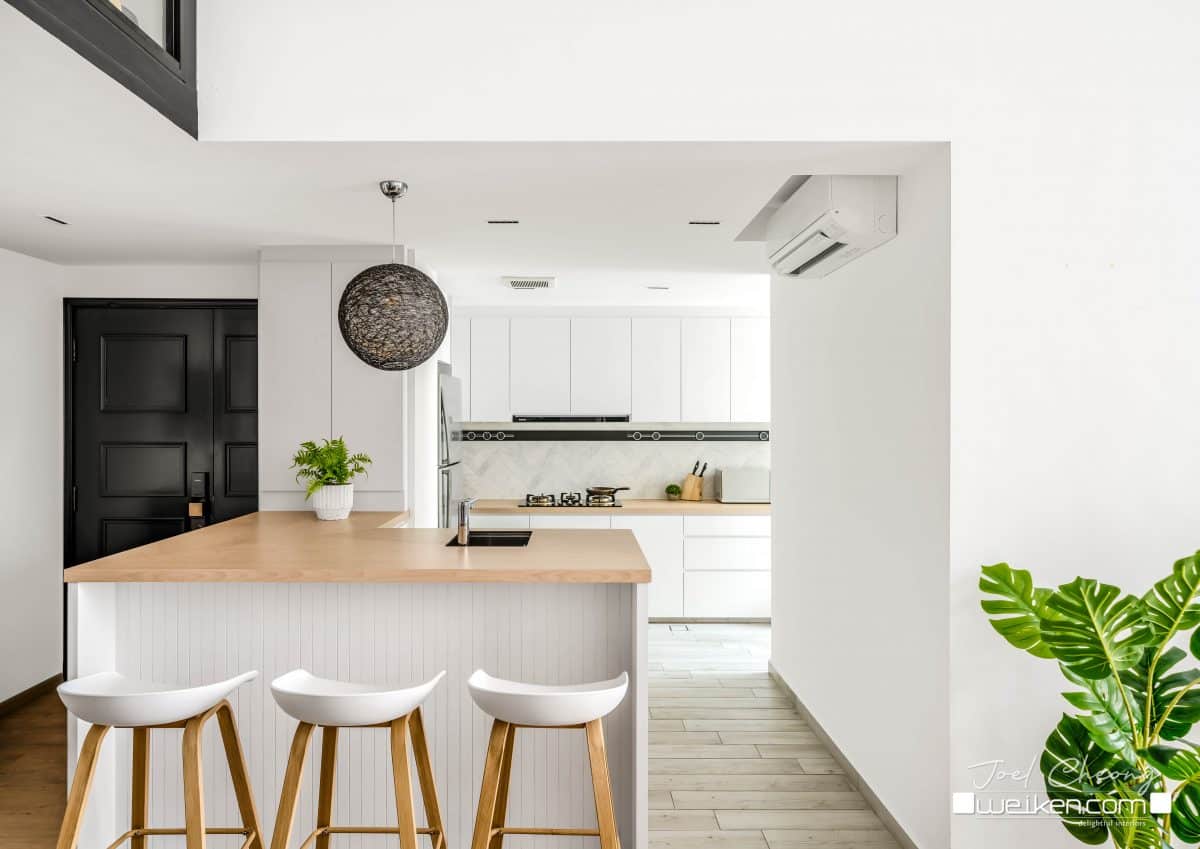
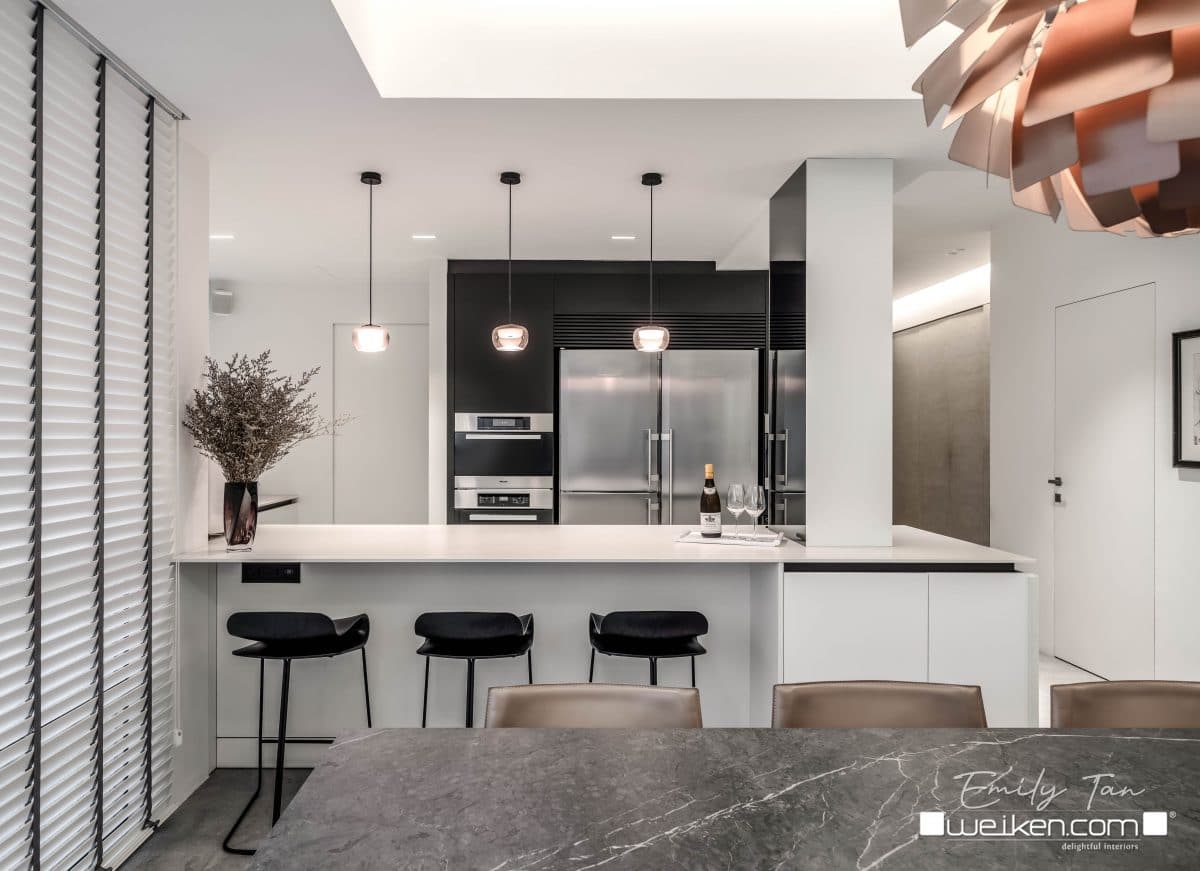
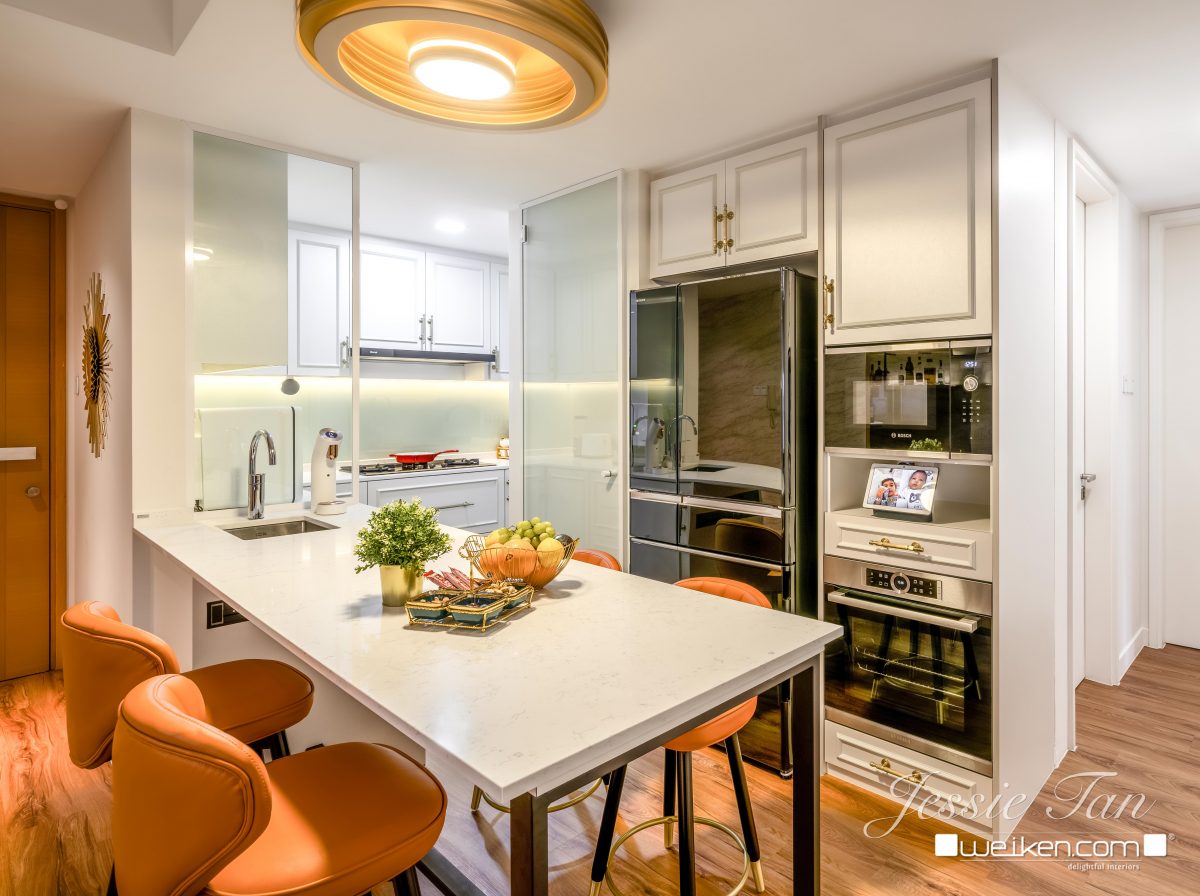
That’s where a peninsula becomes the smarter solution. Unlike a freestanding island, a peninsula is connected to the main cabinetry on one side, creating an extended work surface without requiring additional clearance on all four sides. This seemingly minor difference has a huge impact on space planning. A peninsula can comfortably function as:

  • a breakfast bar before work
  • a serving counter during family gatherings
  • an informal dining table for two or three people
  • a work-from-home desk during the day
  • extra preparation space when cooking for guests

For young families, it’s also become a favourite feature because parents can prepare meals while children sit nearby doing homework or chatting after school. Rather than isolating the cook, the peninsula naturally encourages conversation and keeps everyone connected.

From a renovation perspective, it’s also significantly more cost-effective than building a full island. Since one end is anchored to existing cabinetry, fewer structural modifications are needed, and plumbing or electrical services are often easier to integrate if you plan to include power sockets or additional storage.

Perhaps the biggest advantage, however, is visual. A peninsula subtly defines the kitchen without closing it off. It creates a gentle boundary between the cooking zone and the living area, allowing each space to feel distinct while still maintaining the openness that homeowners love.

4. U-Shaped Kitchen: Maximum Storage Without Making the Kitchen Feel Boxed In
6-Florence-Close-4

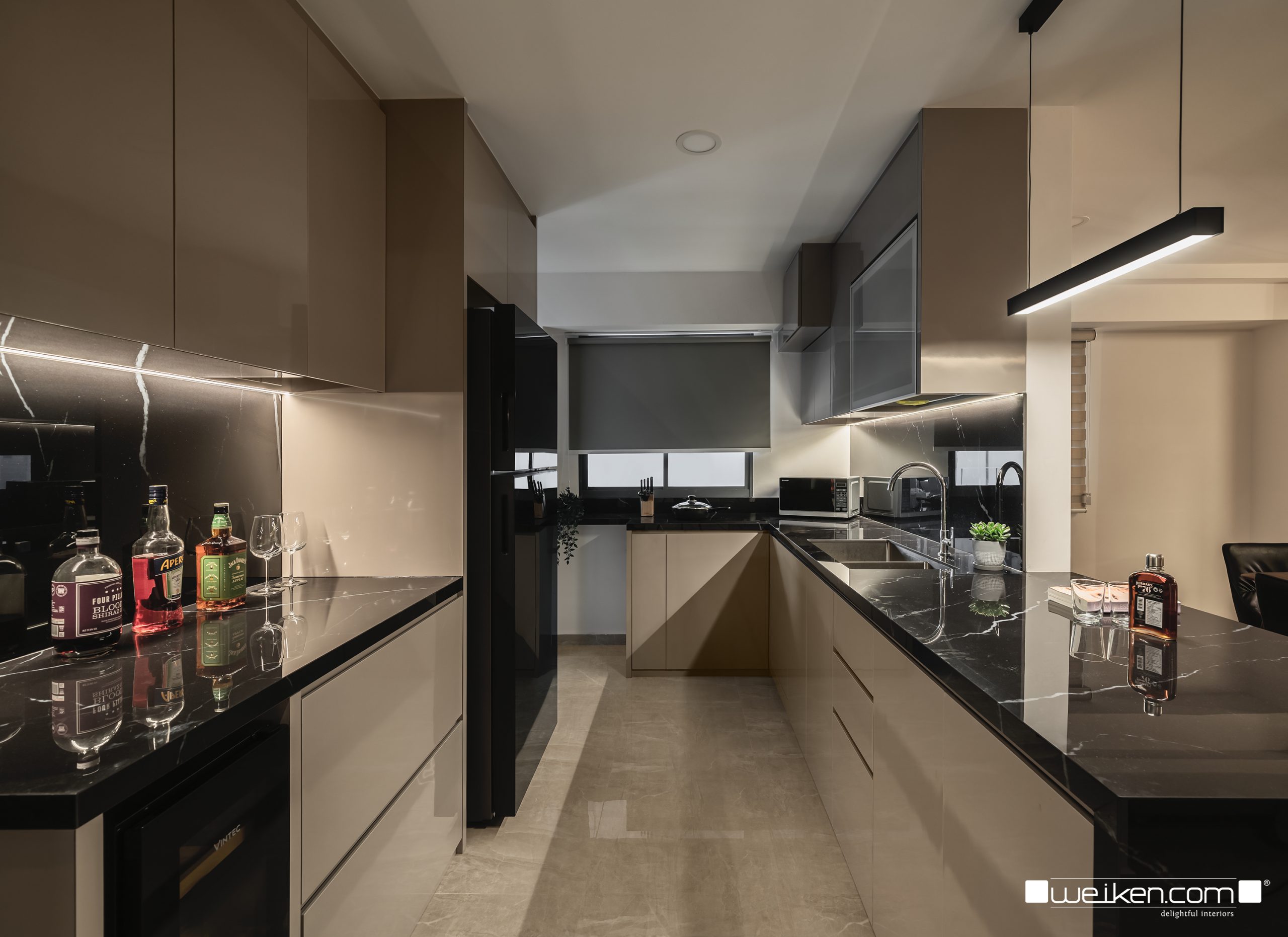
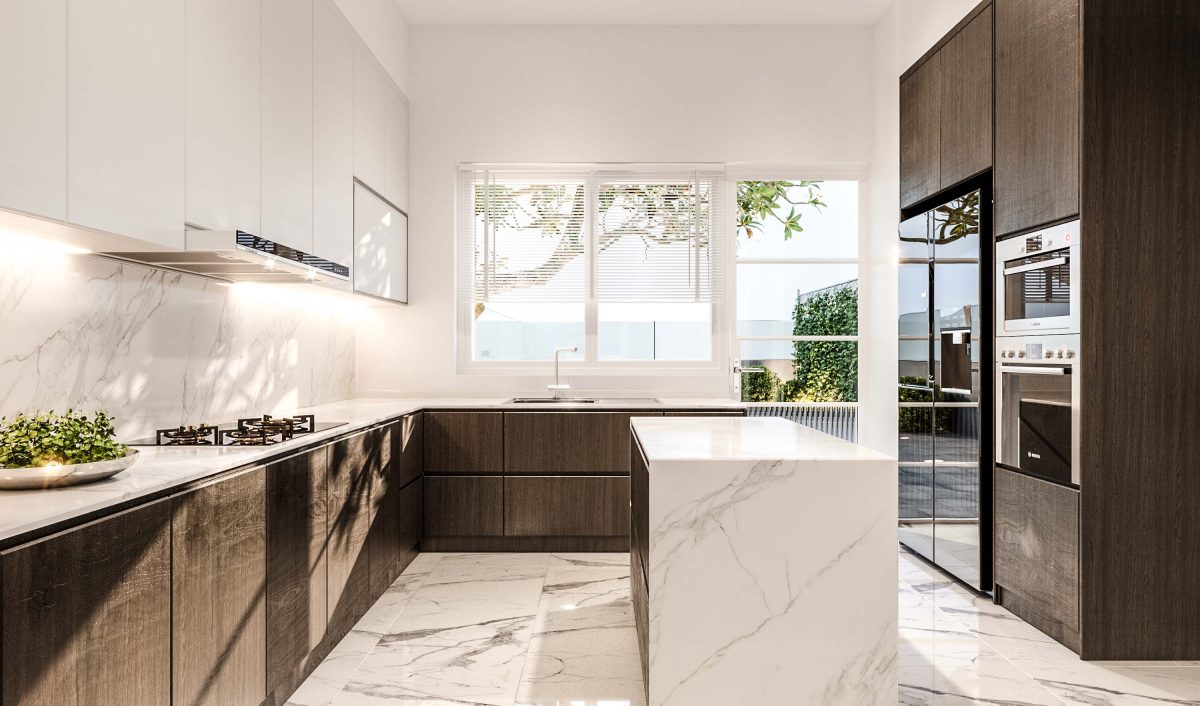
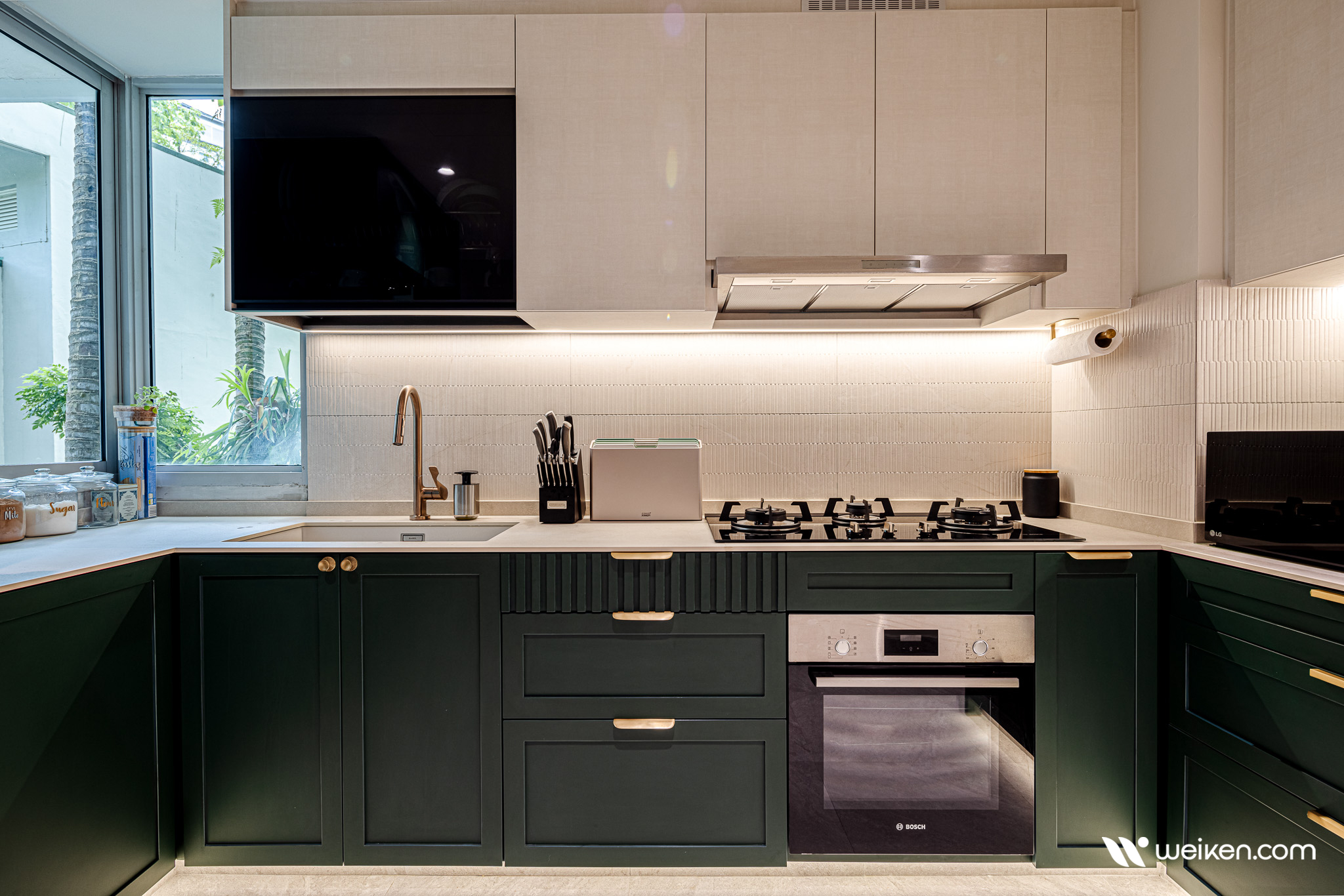
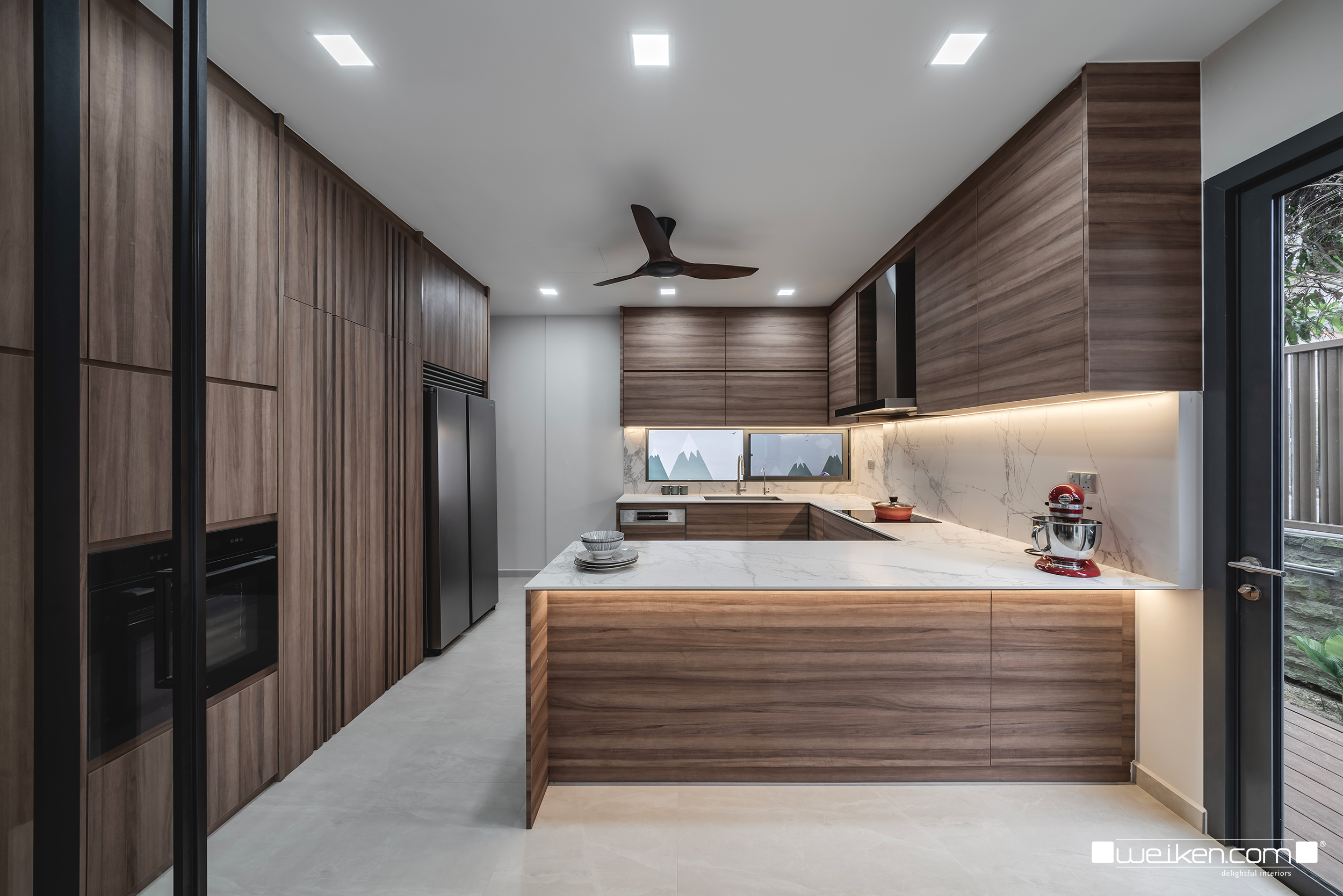
For homeowners who love to cook, few layouts are as practical as a well-designed U-shaped kitchen. Three continuous runs of cabinetry provide generous countertop space, abundant storage and one of the most efficient workflows you can achieve in a residential kitchen.

That said, a U-shaped kitchen is also one of the easiest layouts to get wrong. A common misconception is that adding more cabinets automatically creates a better kitchen. In reality, surrounding yourself with cabinetry on three sides can make an already compact HDB kitchen feel dark, enclosed and visually heavy if the proportions aren’t carefully planned.

This is why experienced designers rarely recommend a traditional U-shaped kitchen for every project. Instead, they adapt the concept based on the size of the apartment, ceiling height, natural lighting and, perhaps most importantly, the family’s cooking habits.

(*) When does a U-shaped kitchen make sense?

A U-shaped layout performs best when the kitchen is used as a serious workspace rather than just a place to prepare breakfast. For example, families who cook lunch and dinner almost every day often need separate areas for food preparation, cooking, washing and plating. Having uninterrupted countertop space on three sides allows multiple people to work simultaneously without constantly getting in each other’s way.

It’s also an excellent option for homeowners who own numerous countertop appliances—espresso machines, stand mixers, steam ovens, multicookers or bread makers. Instead of leaving everything permanently on display, these appliances can each have their own dedicated work zone.

However, the kitchen needs sufficient width. As a general rule, the finished distance between opposing countertops should ideally fall between 1,200 mm and 1,400 mm. This provides enough room for appliance doors to open comfortably while allowing two people to move around without constantly stepping aside. Anything narrower starts to feel restrictive, while anything significantly wider weakens the efficiency that makes a U-shaped kitchen attractive in the first place.

5. Island Kitchen: The Luxury Feature Everyone Wants, but Few Homes Truly Need
288g-bukit-batok-street-25-5

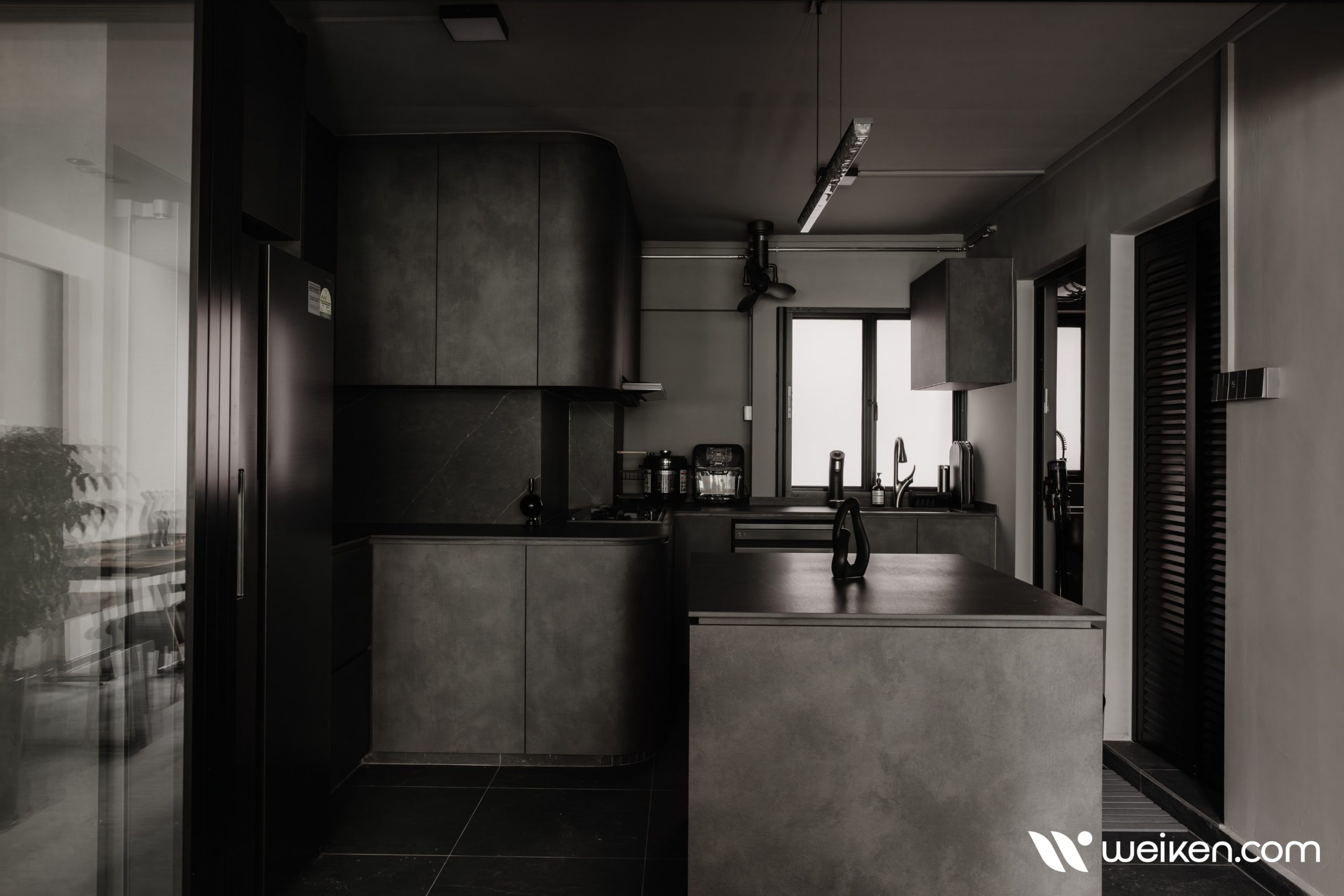
Ask homeowners to describe their dream kitchen, and chances are an oversized island will feature somewhere in the conversation. It’s easy to understand why. Kitchen islands have become the centrepiece of countless renovation shows, Pinterest mood boards and luxury condominium showflats. They create a social hub, provide generous preparation space and instantly give a home a premium, open-plan feel. But here’s the reality that many renovation companies don’t mention until it’s too late:

(*) A kitchen island only works when the room is large enough to support it.

Simply squeezing one into the available space doesn’t create a luxury kitchen. More often than not, it creates a frustrating obstacle that interrupts circulation and makes the entire kitchen feel cramped. This is one of the reasons experienced interior designers are often more conservative than homeowners. Rather than asking, “Can we fit an island?”, they ask, “Will this island actually improve the way you use the kitchen?” Those are two very different questions.

(**) The Clearance Around an Island Is More Important Than the Island Itself

When planning an island, most people focus on the dimensions of the island. Professional designers focus on everything around it. The space between the island and surrounding cabinets determines whether appliance doors can open properly, whether two people can cook together comfortably and whether traffic flows naturally between the kitchen and dining area. As a practical guide:

Clearance Around the Island Experience
900 mm Minimum acceptable. Suitable only where space is tight. One person can work comfortably, but appliance doors may clash with circulation.
1,000–1,100 mm Comfortable for most households. Allows smooth movement while keeping the work triangle efficient.
1,200 mm Ideal if multiple people cook regularly or if the island also functions as a social gathering point.
More than 1,300 mm Usually unnecessary in HDB or condo kitchens. Walking distances become longer without adding meaningful functionality.

The Biggest Kitchen Open Concept Trends in Singapore (2026)

Walk into newly renovated HDBs today and you’ll notice something interesting. The all-white Scandinavian kitchen that dominated the last decade is slowly disappearing. Instead, homeowners are choosing kitchens that feel warmer, softer and more personalised.

Here are the trends defining Singapore kitchens in 2026.

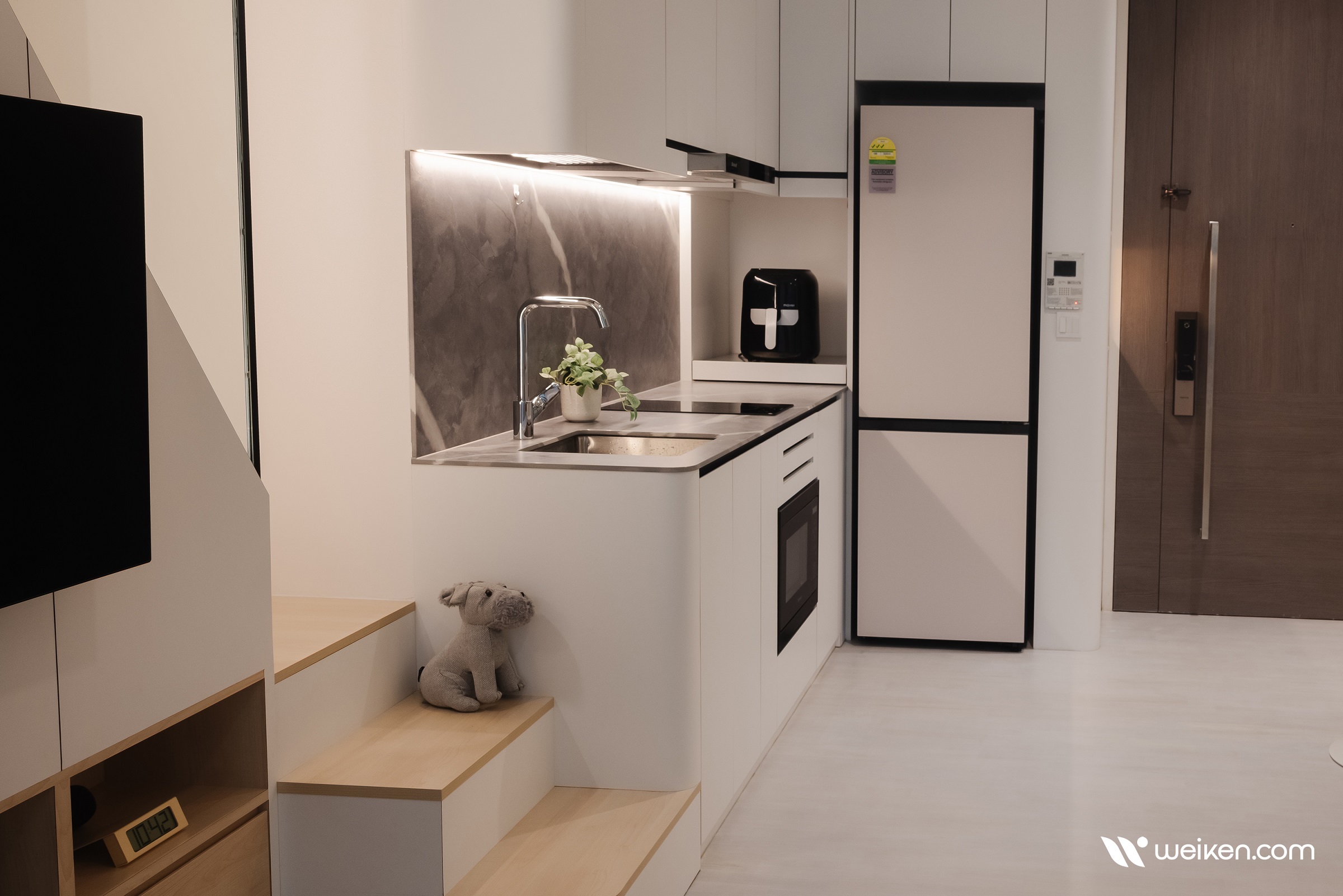
1. Warm Minimalism Replaces Cold Minimalism
17-Seletar-Road-2

Bright white cabinets are giving way to:

  • oat beige
  • mushroom grey
  • olive green
  • walnut veneer
  • smoked oak
  • sand tones
  • clay colours

The result feels much calmer and more luxurious. Rather than looking like a showroom, the kitchen feels genuinely lived in.

2. Fluted Surfaces Are Everywhere

Fluted detailing is no longer limited to TV consoles. It’s now appearing on:

  • kitchen islands
  • pantry doors
  • breakfast counters
  • glass partitions
  • cabinet panels

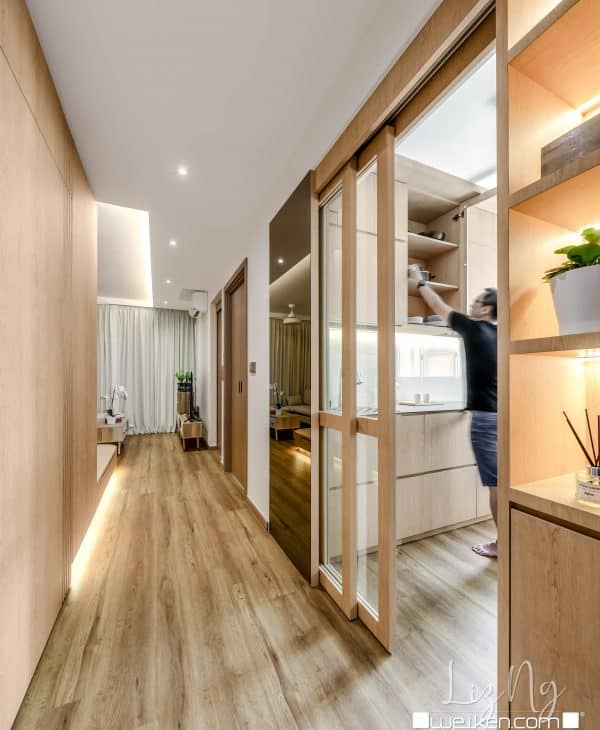
The subtle vertical texture adds depth without overwhelming small spaces. Fluted glass partitions have become particularly popular because they soften views into the kitchen while still allowing light to flow through.

3. Hidden Appliances

One of the biggest signs of luxury kitchens today isn’t what you can see. It’s what you can’t. Homeowners increasingly hide:

  • coffee stations
  • microwaves
  • air fryers
  • kettles
  • rice cookers
  • charging stations

Using appliance garages with retractable pocket doors. Everything stays plugged in. Everything disappears when guests arrive.

4. Dry Pantry Becomes a Must-Have

Five years ago, hardly anyone in Singapore asked for a dry pantry. Today, it’s one of the fastest-growing renovation requests. Instead of cluttering the main kitchen, homeowners dedicate one wall for:

  • coffee machines
  • wine storage
  • breakfast preparation
  • snacks
  • baking equipment
  • smart appliances

This keeps the cooking zone remarkably clean while making daily routines much faster.

5. Floating Cabinet Designs

Another noticeable trend is lifting base cabinets slightly off the floor. Besides looking elegant, floating cabinets:

  • make the kitchen appear larger
  • improve indirect LED lighting
  • allow robot vacuums to clean underneath
  • create a premium “custom-built” appearance

It’s a surprisingly effective visual trick, especially inside compact BTO kitchens.

Conclusion

As mentioned earlier, the benefits of having an open kitchen mean more socializing and communal interaction with everyone inside the home. And what better way of having communal interaction is by adding additional dining space; specifically a bar counter, a breakfast nook, or even a built-in dining table?

  • For small kitchens that use the L shape style, turn the L portion of your kitchen into a bar or breakfast nook and place at least two or three bar chairs underneath it. The counter can also serve as a divider of sorts separating the kitchen from the dining room.
  • For kitchens that are a bit big, you can have a small table built into it and place 4 chairs on either side. This will make for a more communal and semi-compartmentalized look. Additionally, if you want to have a unique open kitchen, you can even convert one drawer into pull-out chopping boards, prep areas, or even a dining area.

So the question now is this? Are you ready to start having your own unique open kitchen concept? By following these examples and tips, you can be sure to have the perfect open kitchen that you will be so proud of!
71 Sinaran Dr-9

Perfect HDB Kitchen Cabinet Design In Singapore

About Kitchen Cabinet Design in Singapore

Out of all the spaces inside an HDB home, there is no space that is frequently used than the kitchen. From dawn to dusk, everyone spends at least 2-3 hours in the kitchen, cooking meals three times a day. But with the rise of numerous HDB houses and space slowly getting smaller, it is safe to say that one must make the most out of the space to have a stylish and functional kitchen.

Nature-inspired

Now when creating the perfect kitchen cabinet design, you must understand that there are so many things to consider, especially if it’s in a HDB house. More often than not, the kitchens in an hdb house or flat would lean towards these options; a warm and natural look or something of the sleek and minimalist look. Below are the several things you need to consider:

1. CHECK THE AREA

The very first thing you need to consider is the area of your kitchen.

  • How big is it?
  • Is it near the door?
  • Is it located near the dining room?
  • Is it near a window?

While some HDB houses will have kitchens built in, there are some that are practically bare and open for design. The first thing is to measure how big the area is and write it down on paper. You can also take note of the location of the provision of the sink and the electrical sockets.

71 Sinaran Dr-9

You can do the same for existing kitchens if you plan to improve or add to it. And if you are having doubts, you can consult a kitchen specialist and discuss with them on what kind of kitchen you would like to have. The benefits of consulting a specialist is that not only will they check the area, but they are also familiar with certain rules and regulations of the HDB property.

Cashew-Road-2

2. TYPES OF KITCHEN

There is no fixed look on the kitchen. In fact, kitchens are the most customizable area in the entire house. There are however types of kitchens that can work with practically any hdb house or flat.

  • Wall Kitchen – This is often seen in smaller houses and is considered the most efficiently designed kitchen that doesn’t compromise both functionality and aesthetics. It comprises of upper and lower cabinets installed against a wall; with some of the appliances being incorporated with the cabinets. This type of kitchen provides various kitchen cabinet design combinations from open shelves to compartmentalized boxes.

  • Galley Kitchen – This type of kitchen layout is characterized by having two rows of cabinets facing one another, creating something of a passage in between. This layout makes use of a narrow space and maximizes its overall storage potential.

Pullman-Residences-4

  • L-Kitchen – Often seen as the most feasible layout for both small and large kitchens, it takes its name from having two cabinets perpendicularly arrange to form an L-shape. This allows you to take advantage of the dead space in the corners and provides options for a bar or breakfast nook.

445A-New-Punggol-Road-3

  • U-Shape – If you have quite a huge space and would like to incorporate more storage and possibly bigger appliances, the U shape is perfect for you. Characterized by the orientation of the kitchen’s layout, this takes advantage of more

10-Rivervale-Link-8


3. KITCHEN CABINET MATERIALS

Now that you have an idea on what type of kitchen you are going for, it’s time to consider the materials. Because the kitchen is the most used area of the house, it is only natural that you will invest in good quality materials in creating your kitchen cabinet design.  You would want materials that will ensure that they will last longer and can withstand both moisture and heat.

  • Laminate boards are one of the most commonly used materials in making kitchen cabinets they are the most inexpensive choice and can come in a wide array of color and finish options. They come readily available with many suppliers providing them. However, one needs to be careful of spillage. If the laminates are not properly heat sealed during installation, chances are the boards will slowly disintegrate.
  • Woods are also a good material as they are built to last and are quite durable. Popular wood species for kitchens include mahogany, maple, and teak, beech wood, oak and even walnuts. The use of wood gives you many options and combinations to try. However, depending on the wood, it can also be quite expensive.
  • Lacquer boards are new to the kitchen scene, but they already are favored due to its sleek and smooth look. Like the laminate boards, it comes in a variety of finishes and colors and is quite easy to maintain and clean. However, just like wood it can also be quite expensive and rarely comes in wood grain options.
  • Steel is also a good material as it is durable and can be antibacterial. They are usually built in commercial kitchens since it can handle heavy usage, but can also be in hdb houses, especially if you favor a more modern masculine look. However, they are limited in design options and is not as versatile as the other materials.
  • Granite is quite good for kitchen countertops, especially for modern luxurious kitchens. Granite stone slabs come in various colors ranging from black to light brown and is quite easy to maintain and clean. It can withstand heat and moisture and is scratch resistant. However, granite slabs are also quite expensive and tricky to mount. You will need to hire professionals who can easily and carefully mount the slab.

223-Lorong-8-Toapayoh-8
Bidadari-Park-Drive-2

4. STORAGE IS PREMIUM!
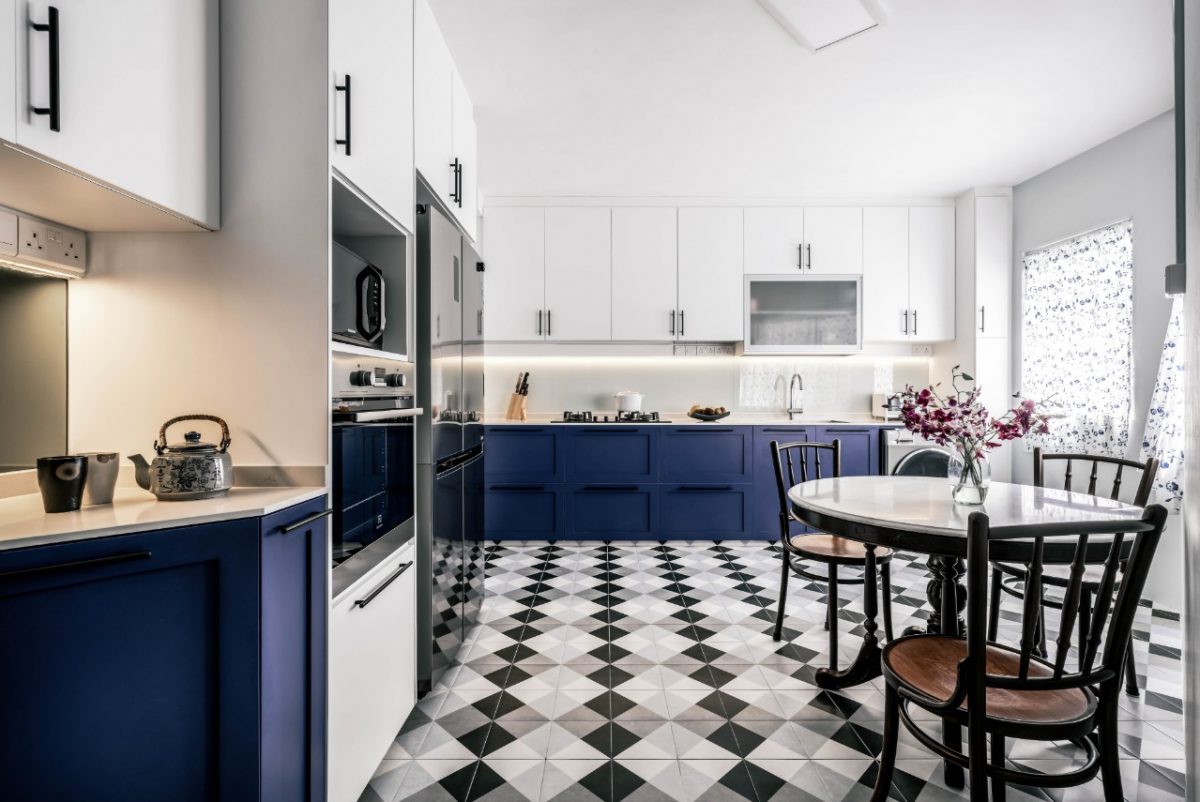
If there is a universal truth of sorts, its’s the fact that the kitchen has more utensils, tools and appliances than any other area of the house. Therefore, one must never take storage for granted. Apart from making the cabinets and shelves, take into consideration even the small niches.

Overhead cabinets are perfect for your plates, bowls and other table wares. But if you would like full maximum storage, consider having tall, cabinet units incorporated in the design. These can make for good pantries and it can further be enhanced with storage mechanism like pull out trays, baskets and even rotating carousel trays.

Apart from your standard swing door cabinets, consider also having drawers to keep your utensils and cutlery organized. To make it even more unique, have specialized compartments made for the drawers. That way, your utensils and silverware can be organized in a neat manner.

Speaking of baskets, consider having built in trash bins in one of the bottom cabinets instead of having the trash bin out in the open. For the cabinet with the sink, have some shelf compartments made so that you can store and organize your cleaning supplies.

If you will employ the L shape kitchen layout, you will notice that the corner tends to be a wasted or dead space. Take full advantage of the space by employing rotating carousel trays that maximize the once wasted space. If you have a narrow space in your wall, you can use a full pull out shelf tray for either condiments, sauces or even pastas.

You can even add more space by creating a foldable countertop that disappears into one of the cabinets when not in use .The only limit in making your kitchen cabinet design is your imagination.

191A-Rivervale-Drive-1

5. LIGHTING

Finally and perhaps the most important thing to consider is the lighting. Especially when you are cutting ingredients or cooking a full meal. It is important to have ample and suitable lighting that not only aids in your task, but also completes the look of your hdb kitchen. Cove or recessed lightings are quite popular, especially if you have tall ceilings. This kind of lighting can make your kitchen look bright and warm. For a modern ambiance, opt for bulbs that give off a bright daylight look and for a cozier feel, go for bulbs that give off a warm white feel.

If you’re employing the L- shape kitchen or island kitchen, try hanging drop pendant lights over one section of the kitchen. This will highlight your intended focal point; especially if the section is a bar or breakfast nook.

A really unique and functional idea is to have built in lights under your overhead cabinets. That way, when you work, you have light directed towards your work space. Opt for LED strip lights or small LED bulbs.

16-Shan-Road-2

Having a unique kitchen in your HDB house or flat makes living there even more satisfying. Especially if you employ little bits of your preferred style and personality. But perhaps the most important tip to consider when you design your kitchen cabinets is creating a look that is both timeless and can adapt to practically any period and style.

So there you have it. Having a unique hdb kitchen may seem a bit challenging at first, but like with many good recipes, all it takes is a few ingredients, some patience, a little bit of hard work and you have yourself a well-made kitchen to call your very own.

Hotline 6465 6656 Get A Free Quote