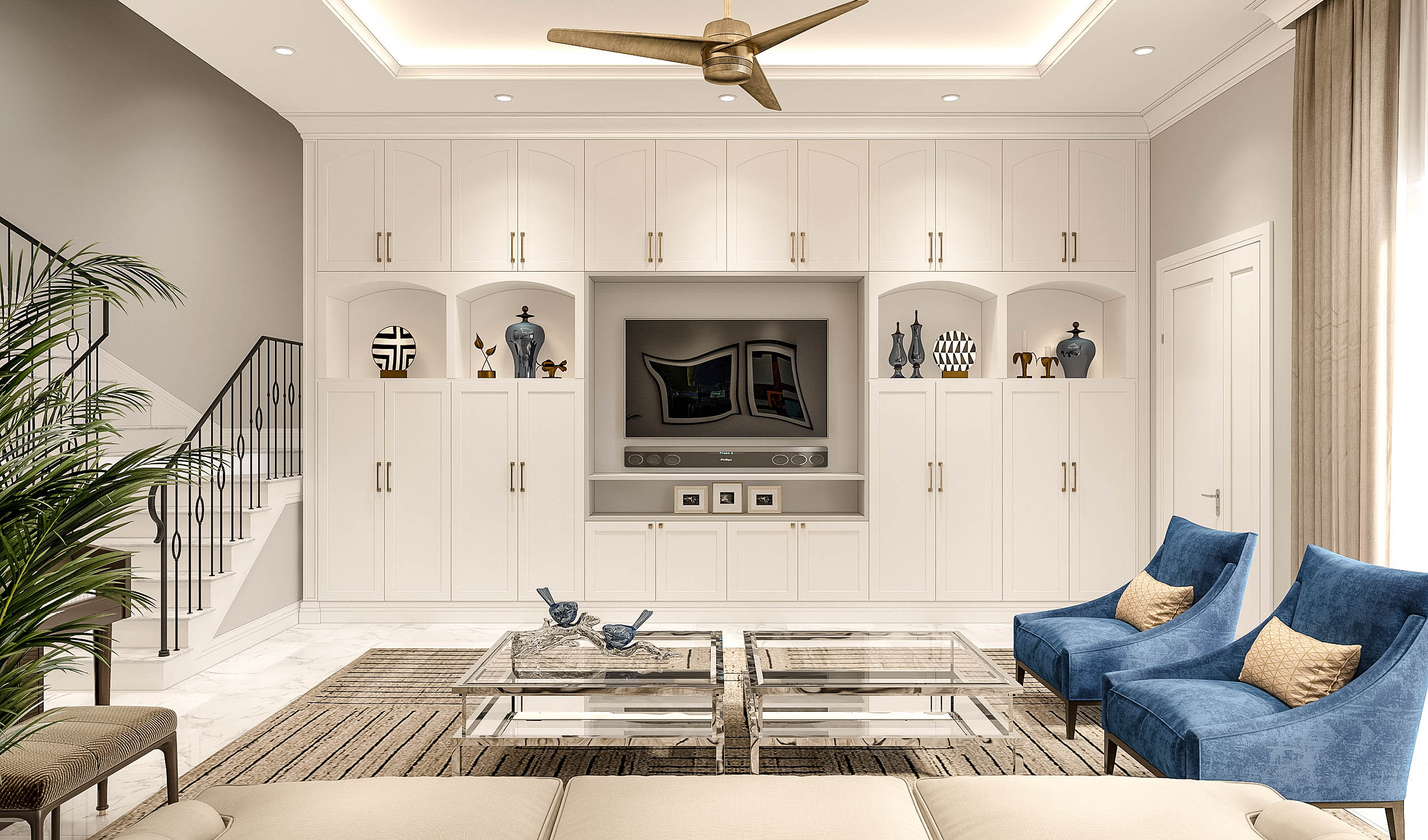
ABOUT FALSE CEILING DESIGN
In the Singapore interior design scene, a false ceiling, often referred to as a “drop ceiling” or “suspended ceiling”, is a secondary ceiling installed beneath the original slab. It isn’t part of the building’s core structure, but rather a design feature used to refine proportions, conceal services (like wiring, ducting, or piping), and enhance lighting control within a space.
This feature is especially relevant in local HDB flats and condominiums where ceiling heights can vary. In some units, the vertical space feels excessive or visually disconnected from the rest of the interior. You may have already experienced this: the furniture is in place, the styling looks right, yet the room still feels unfinished. More often than not, the issue lies above eye level. A bare, high ceiling can make lighting feel harsh or insufficient, and the overall space may lack cohesion.
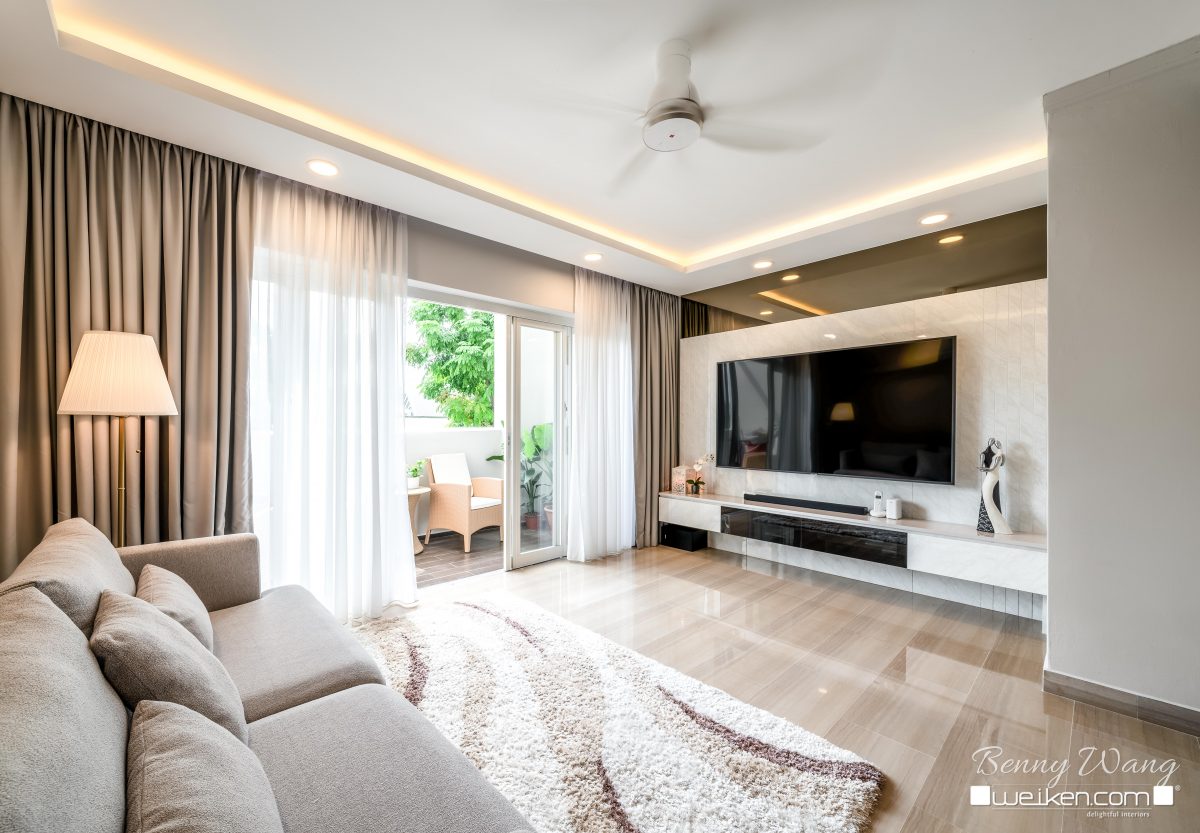
A false ceiling addresses this by introducing a more considered spatial layer. It helps to visually “bring down” the height to a comfortable scale, while allowing designers to integrate cove lighting, recessed downlights, or even air-conditioning systems in a clean and seamless way. In essence, it transforms an overlooked surface into a purposeful design element.
While a plain ceiling works for standard heights, spaces with higher ceilings present an opportunity to do more. With the right false ceiling design, what was once an empty overhead plane can become a defining feature: adding depth, ambience, and a sense of completeness to the home.
Below are some commonly adopted false ceiling concepts in Singapore homes, along with how they can be tailored to different interior styles.
1. FALSE CEILING DESIGN | COVE LIGHTING
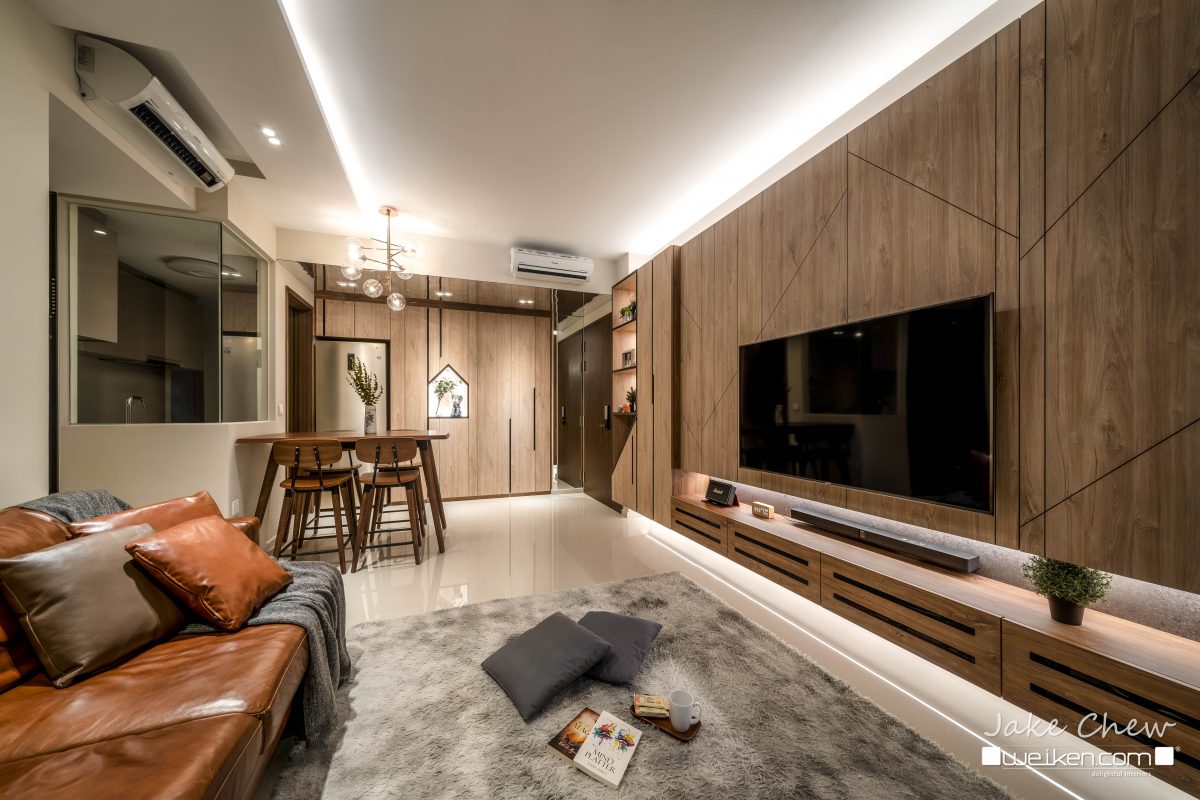
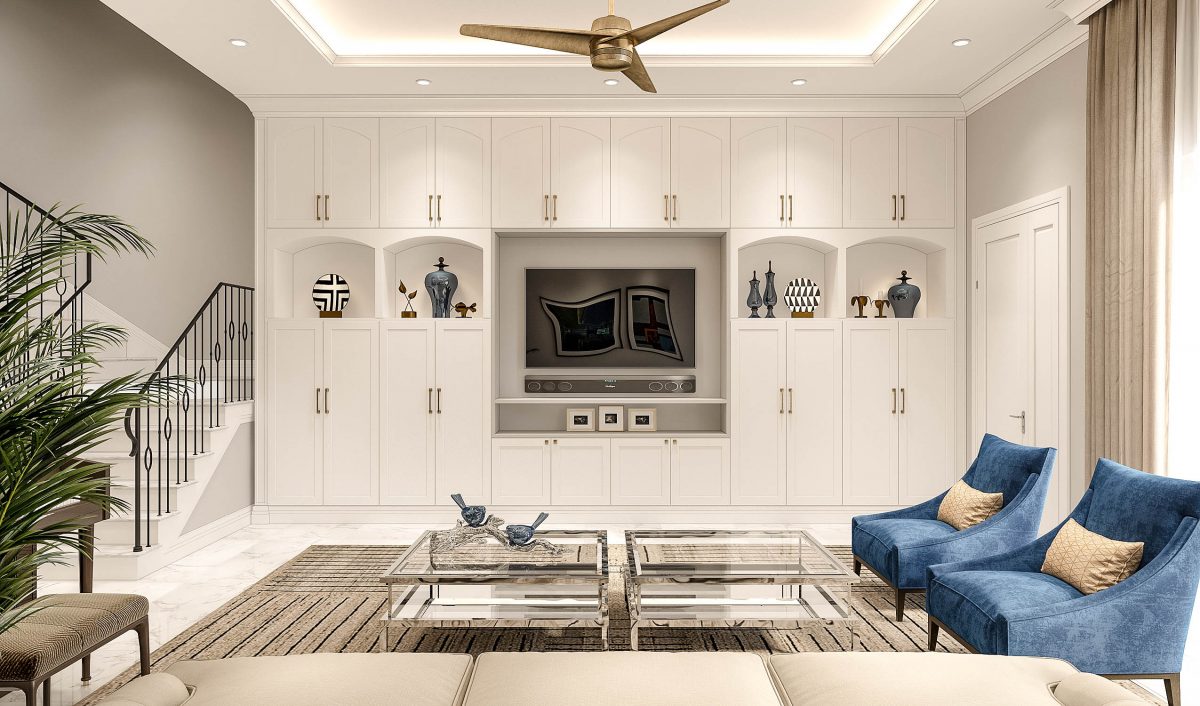
Arguably the most popular false ceiling design in many modern homes, the cove ceiling comprises of a straight, rectangular slab that is placed a few centimeters below the existing ceiling. Now you might think that if you construct a false ceiling, you might be spending more; especially if you will add additional lighting fixtures and electrical wiring to your existing ceiling. But believe it or not, it will actually help you save money in the future. This is because with the cove lighting’s ability of effortlessly dispersing light, you won’t need to use more than one light source, thus saving you money. Call it a practical investments of sorts.
There are at least 4 ways you can employ the cove lighting look:
- Recessed Tray: This is your basic cove lighting in which a beam is attached to the wall. A pin light is attached to the point where the wall and beam connect with its light aimed directly at the existing ceiling in order for it to bounce off. This is often seen in many condos, especially condos that have very little sources of light. This is fairly easy to construct. To start, simply install either a T bar light or an LED strip across the point where the beam and wall meet. Make sure that when mounting the beam for your cove, there should be enough space for you to change your lights when it burns out.
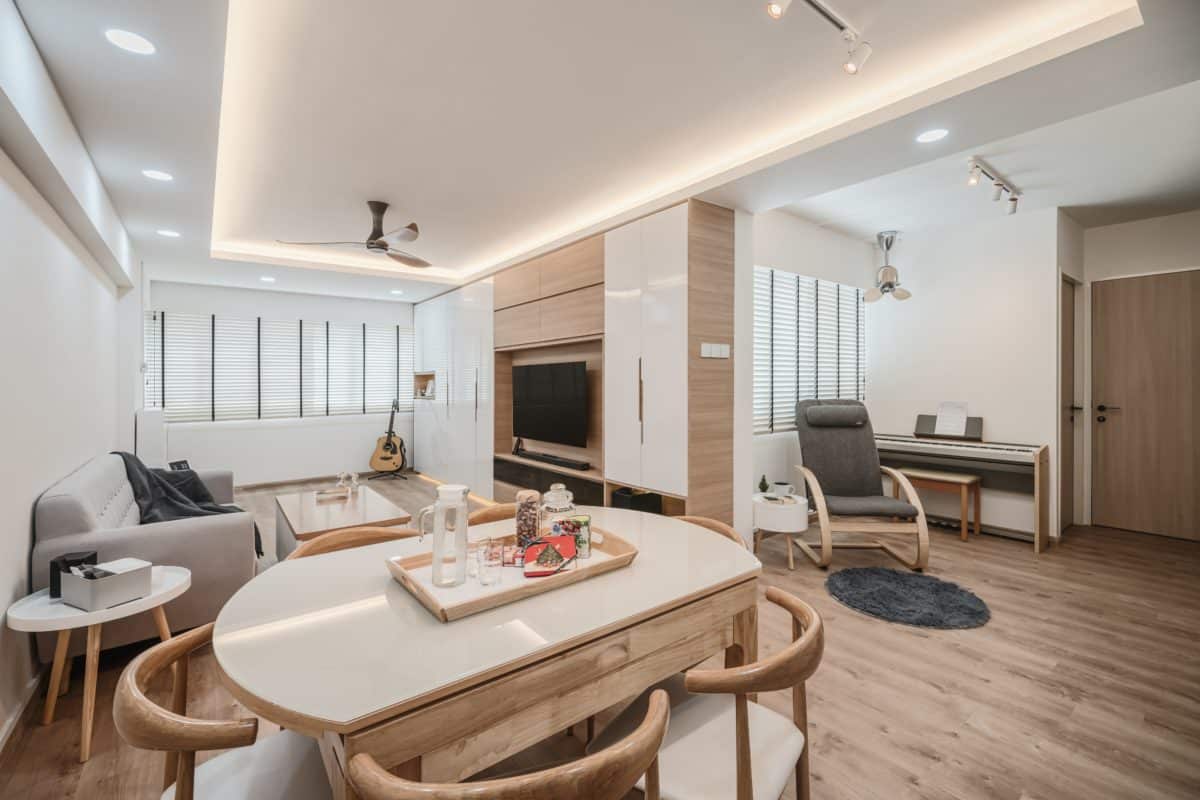
- Crown Molding Cove Lighting: This is seen in contemporary classic interiors in which the cove lighting is concealed behind a crown molding. This would make for an almost luxurious looking interior; especially if you opt for warm white bulbs.
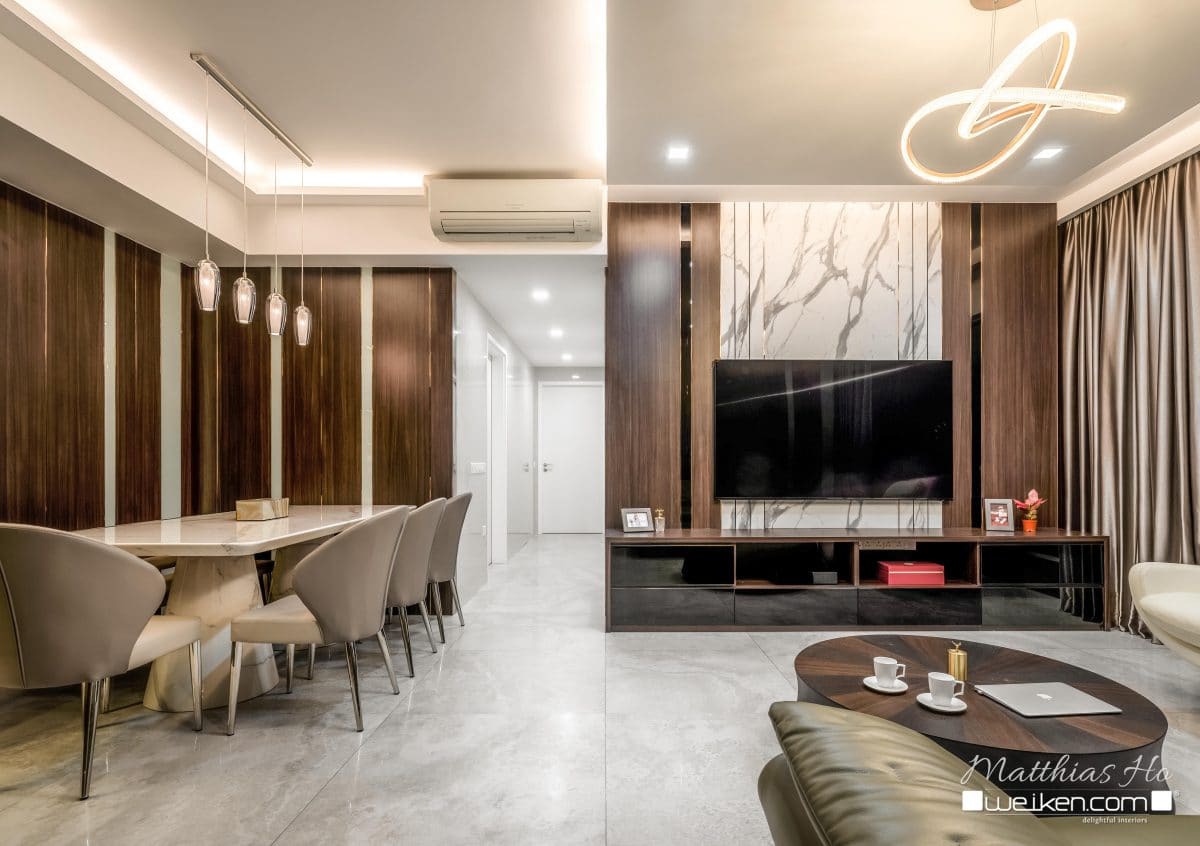
- L-Shaped Cove Lighting: As its name implies, it is a cove lighting that takes the shape of an L. This is often used in semi wide spaces. Similar to how an L shape sofa would maximize the space, so too would the L shape cove. In this case, it would actually give the illusion of an even bigger and well-proportioned room. Try experimenting with different orientations of the L shape and see which one suits your interior the most.
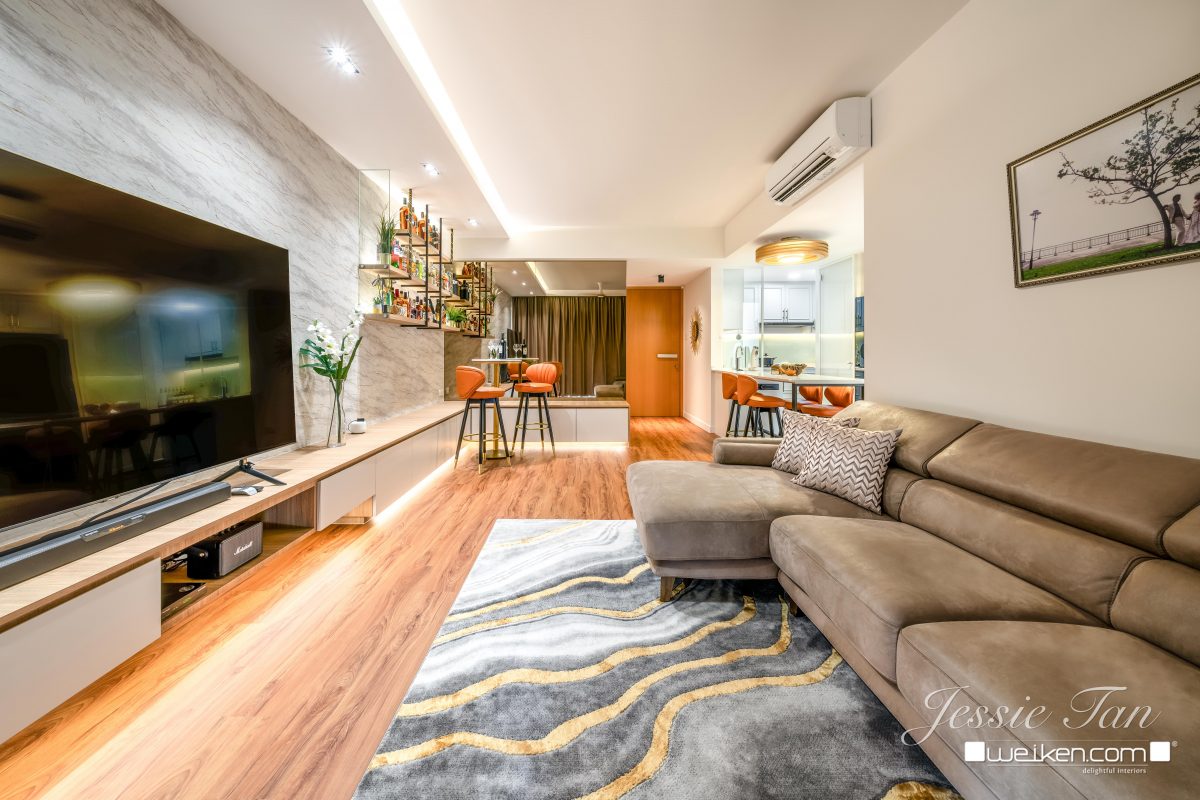
- U shaped Cove Lighting: This kind of orientation is often seen in small spaces such as condos and HDB homes. Similar to the basic cove lighting with the exception of it encompassing three sides of the room, leaving one side free as an accent.
- I Beam Coffers: This is a rather unique cove lighting in a way that it combines the use of coffers. It uses the grid frames of the coffer false ceiling as a cove with each side having a light source affixed to it. This is often seen in bigger and more elaborately designed homes. While applying it to a small home could make the space look even smaller, you can actually use it in a smaller scale as a focal or accent point. Apart from square coffers, try experimenting with other shapes like honeycombs, triangles and if you are bold to try, 3d squares.
2. FALSE CEILING DESIGN | DROPPED CEILING
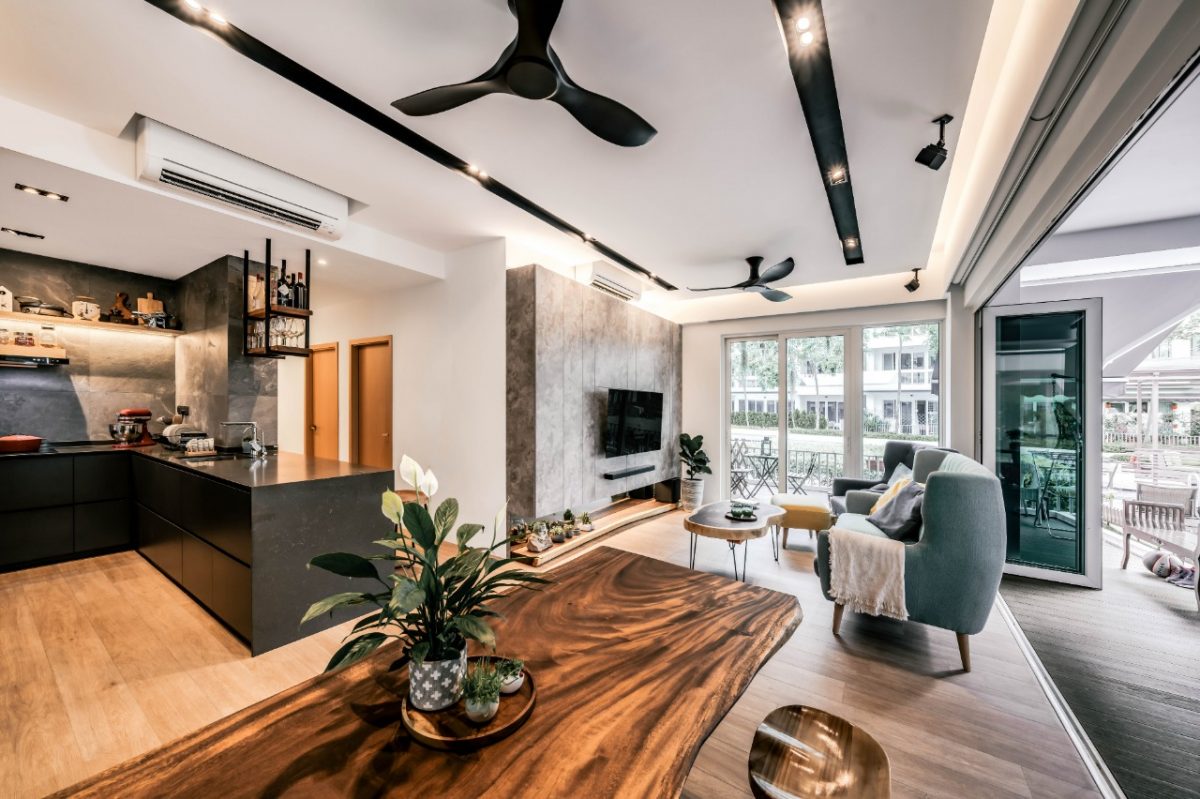
While the cove lighting uses the edge or the wall, a dropped ceiling uses the center of the existing ceiling to create a false ceiling design. Also called a suspended ceiling, a dropped ceiling, as the name implies, is a structure that is directly supported by the existing ceiling through the use of metal frames. Many interiors, especially those that are of the industrial look, often use this technique as a means to conceal the exposed and raw ceiling in a more creative manner
======
For those who appreciate the industrial interior design aesthetic:
A rising trend in many HDB flats, condominiums, and even commercial spaces is the use of raw building materials such as brick, concrete, wood, and metal. While some may find the look reminiscent of a factory, others appreciate it as a bold and masculine style that celebrates beauty in unexpected places. This is what we call industrial interior design, read this article for more information.
======
While some often go for rectangular or square drop ceilings, others opt for more wavy and curved shaped ceilings. This kind of design is quite flexible as it offers a wide variety of shapes and motifs to use. Several popular motifs include waves, interwoven vines, overlapping blocks and even wooden planks. A rule of thumb when it comes to dropped ceiling is to make sure that any pendant light must be at least 90cm from the surface of any furniture. As much as possible, avoid pendant lights that are bigger than the furniture.
3. FALSE CEILING DESIGN | BEAMS AND COFFERED
This kind of design is often seen in classic and rustic interiors, but that doesn’t mean it won’t translate to other styles. Installing a beam is yet another creative method to making a false ceiling in a way that it partially conceals the existing ceiling and deters the attention towards it.
It is often made entirely out of wood; especially for rustic interiors. But it can also be finished in other colors and it can even have LED light strips installed along the top, giving off an indirect light source. The same can be said for coffers, which are beams that are formed into grids and installed below the existing ceiling. Just as with the cove and the drop ceiling, the coffer ceiling gives off a more centralized look. However, you must take care with how low you will install these and exactly how heavy they will be. Depending on the provided space height, you run the risk of actually making your room even smaller than it normally is.
4. COMBINATION OF COVE AND DROP CEILING
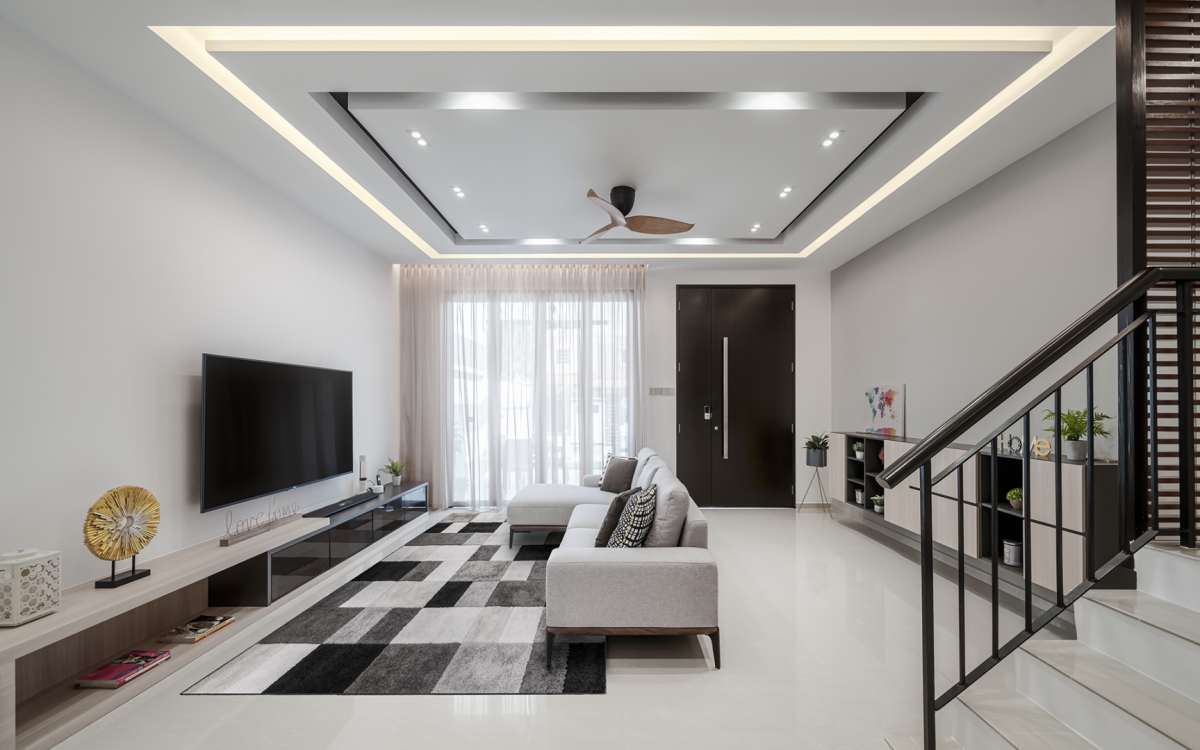
If you liked the first two, then you might want to consider employing both styles in one area. The combined cove and drop ceiling is often used in modern homes and can easily brighten up an interior, both metaphorically and literally. You can see this type of false ceiling design in spaces like the dining room where the dining set is balanced with an elaborate ceiling design that defines the space; the hallway leading up to the rooms; the living room and even in commercial spaces like restaurants and hotels.
You can achieve the look by doing either of these combinations. If your living room has a large sofa, you can construct a cove lighting system the size of the living room and install a drop ceiling in the center. You can install some pin lights on either the corners of the beams or along the beams itself. Accentuate the cove lighting with a complimenting pendant fixture and position your large sofa directly below it. You will be surprised at how big of a change it has become.
You can also try a suspended ceiling with cove lightings on each side and accented with a unique modern lighting fixture. You could also try making your drop ceiling have an interesting carved design, which will be illuminated by the covered cove lights. The possibilities are endless, but again, take care to consider the height and size of your room, as it could potentially make your room look smaller and congested.
And if you’re unsure of what false ceiling design best suits your space, consult a specialist. There are designers and companies who specialize in creating the perfect false ceiling. You can tell them what you would like to achieve and they can present you with options that best suit both your space and requirements such as your budget.
So what are you waiting for? If you’re tired of having the same boring ceiling, take a step back and unleash your creativity. After all, your furniture already has personality. Don’t you think your ceiling should have one too?